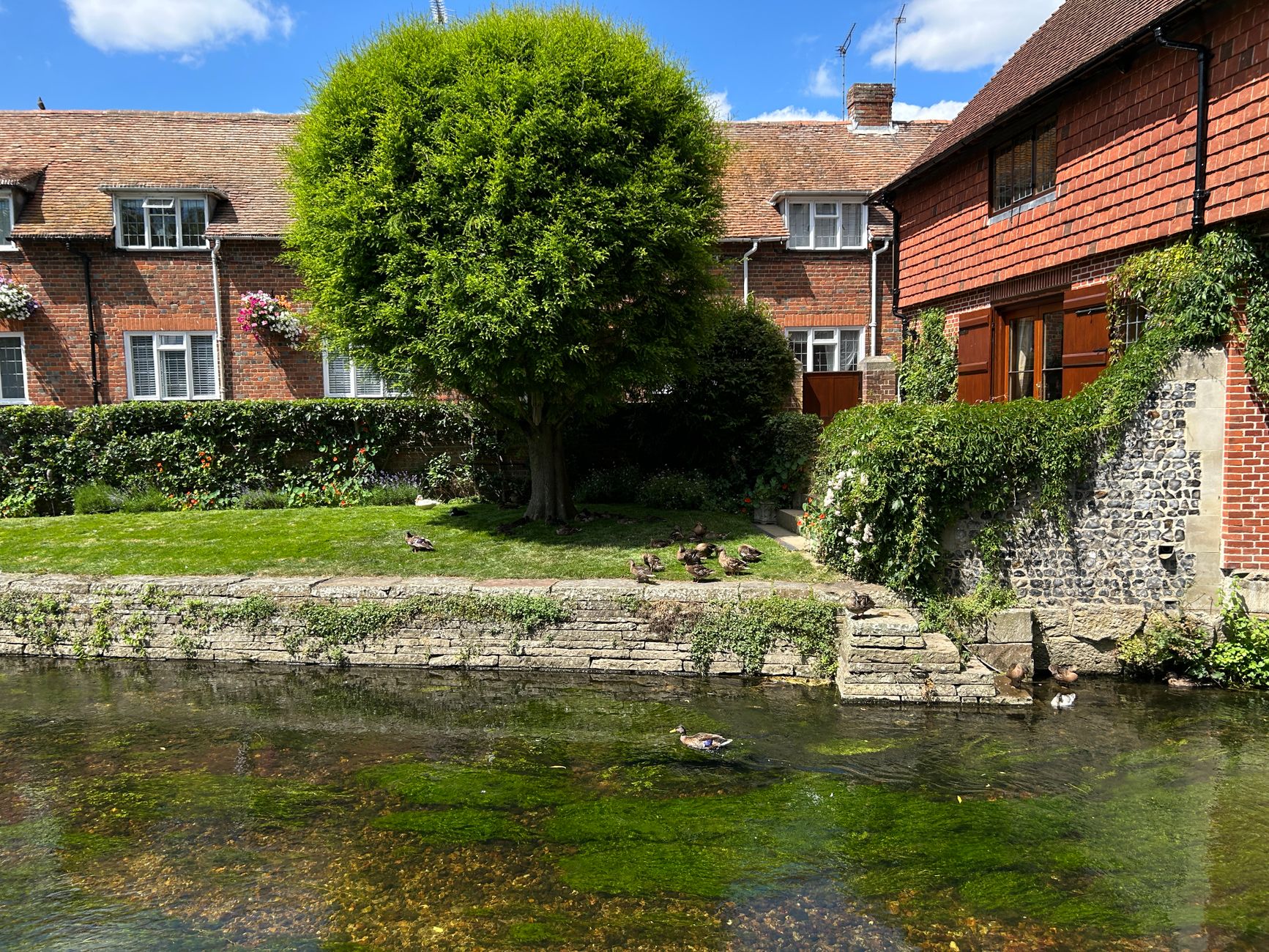
Audrey Hepburn's childhood years in a Kent village
Level
b1
Topic
culture
Read this at a different level:c1
Audrey Hepburn is one of the most famous actresses in history. Many people know her from her films. But few people know much about her early childhood years.
Before World War Two began, Audrey spent three years living in Elham. Elham is a quiet village in Kent, England. Village life in Kent was very different from the busy cities of Europe. If you visit Elham today, you will still find a peaceful and charming place. Historians believe that her time there shaped her early life in important ways.
Growing up in a small English village was a significant experience. Children who lived in places like Elham used to spend a lot of time outdoors. The countryside offered a calm and safe environment. You'd better not underestimate how much a place can influence a young person. Quiet surroundings, green fields, and a close community can shape a child's character deeply.
Audrey later became known for her elegance and gentle personality. Some people think that her years in Elham helped to build those qualities. If you are interested in her life, you had better start by learning about her childhood. It gives important context for understanding the person she became. Her story shows that early experiences, even in a small village, can have a lasting impact.
Highlighted sentences show the grammar focus structure.
Key Vocabulary
charming
/ˈtʃɑːrmɪŋ/
Pleasant and attractive in a way that makes people like it or enjoy being there.
We stayed in a charming little café by the river and didn't want to leave.
significant
/sɪɡˈnɪfɪkənt/
Important or large enough to have a noticeable effect or to be worth paying attention to.
Learning to speak a second language was a significant achievement for her.
underestimate
/ˌʌndərˈɛstɪmeɪt/
To think that something or someone is less important, powerful, or capable than they really are.
Don't underestimate how much exercise can improve your mood and energy levels.
influence
/ˈɪnfluəns/
To have an effect on how someone thinks, behaves, or develops.
Growing up near the ocean can influence a child's love of nature and water sports.
elegance
/ˈɛlɪɡəns/
A quality of being graceful, stylish, and attractive in appearance or behaviour.
The dancer moved across the stage with such elegance that the audience was completely silent.
lasting
/ˈlæstɪŋ/
Continuing to exist or have an effect for a long time.
The trip to Japan made a lasting impression on him that he still talks about years later.
| Image | Word | IPA | Definition | Example |
|---|---|---|---|---|
charming | /ˈtʃɑːrmɪŋ/ | Pleasant and attractive in a way that makes people like it or enjoy being there. | We stayed in a charming little café by the river and didn't want to leave. | |
significant | /sɪɡˈnɪfɪkənt/ | Important or large enough to have a noticeable effect or to be worth paying attention to. | Learning to speak a second language was a significant achievement for her. | |
underestimate | /ˌʌndərˈɛstɪmeɪt/ | To think that something or someone is less important, powerful, or capable than they really are. | Don't underestimate how much exercise can improve your mood and energy levels. | |
influence | /ˈɪnfluəns/ | To have an effect on how someone thinks, behaves, or develops. | Growing up near the ocean can influence a child's love of nature and water sports. | |
elegance | /ˈɛlɪɡəns/ | A quality of being graceful, stylish, and attractive in appearance or behaviour. | The dancer moved across the stage with such elegance that the audience was completely silent. | |
lasting | /ˈlæstɪŋ/ | Continuing to exist or have an effect for a long time. | The trip to Japan made a lasting impression on him that he still talks about years later. |
Grammar Spotlight
'Had better' / ''d better'
had better / 'd better + base verb
When do we use it?
- Use 'had better' to give strong advice or a warning — the speaker thinks something is important or necessary right now or very soon.
- Use it when there could be a negative result if the advice is not followed — it is stronger than 'should'.
- It works for all subjects (I, you, he, she, we, they) — the form never changes.
How is it formed?
subject + had better / 'd better+base form of verb (infinitive without 'to')
'd better is the contracted form of had better — both are equally correct
★No 'to'! You'd better remember that!
See it in action
Audrey had better learn English quickly if she wants to settle into village life in Kent.
It's getting dark — we'd better go inside before the storm starts.
You'd better not forget your history homework — the teacher will be very strict.
She'd better pack warm clothes if she is moving to a quiet village in England.
Remember this
✗You had better to leave now.
✓You had better leave now.
'Had better' is always followed by the base form of the verb — never use 'to' after it.
✗She hads better study more.
✓She had better study more.
'Had better' never changes — it stays as 'had' for every subject, including he/she/it.
✗You had better not to be late.
✓You had better not be late.
To make 'had better' negative, add 'not' directly after 'better' — do not add 'to'.
Discussion Questions
- 1.
Did you grow up in a city, a town, or a village? How do you think the place where you grew up influenced your personality or the way you see the world?
- 2.
In your country, do people think that childhood experiences have a big effect on who a person becomes as an adult? What do you think?
- 3.
If you could choose one place for a child in your family or community to grow up — a busy city or a quiet village — which would you choose and why?
Comprehension Questions
- 1.
Where did Audrey Hepburn live before World War Two began?
- 2.
Why do historians think Audrey's time in Elham was important?
- 3.
What kind of lifestyle did children in places like Elham typically have?
- 4.
How does the article describe Audrey Hepburn's personality as an adult?
- 5.
Does the article suggest that small places can have a big effect on a person's life?
View answers for the comprehension questions
- 1.Audrey Hepburn lived in Elham, a quiet village in Kent, England, for three years before World War Two began.
- 2.Historians believe that her time in Elham shaped her early life in important ways, suggesting the village environment had a meaningful influence on who she became.
- 3.Children in places like Elham used to spend a lot of time outdoors, enjoying the calm and safe environment of the countryside.
- 4.The article describes Audrey as known for her elegance and gentle personality, qualities that some people connect to her childhood years in Elham.
- 5.Yes, the article clearly suggests this. It states that early experiences, even in a small village, can have a lasting impact on a person's character.
Test your knowledge
Question 1Fill-in-the-blank
Everyone admired the dancer's ____ as she moved gracefully across the stage.
Question 2Fill-in-the-blank
Reading books every day can greatly ____ how well a student writes.
Question 3Fill-in-the-blank
Passing your driving test is a ____ step toward becoming more independent.
Question 4Fill-in-the-blank
It is easy to ____ how difficult it is to learn a new skill until you try it yourself.
View answers for test your knowledge
- 1.elegance
- 2.influence
- 3.significant
- 4.underestimate
Practice this topic live
Use what you’ve learned in a real 1:1 English conversation with an experienced Talk4Impact tutor.
Practice with tutor