Teenagers' views on artificial intelligence in education
Level
b1
Topic
technology
Read this at a different level:c1
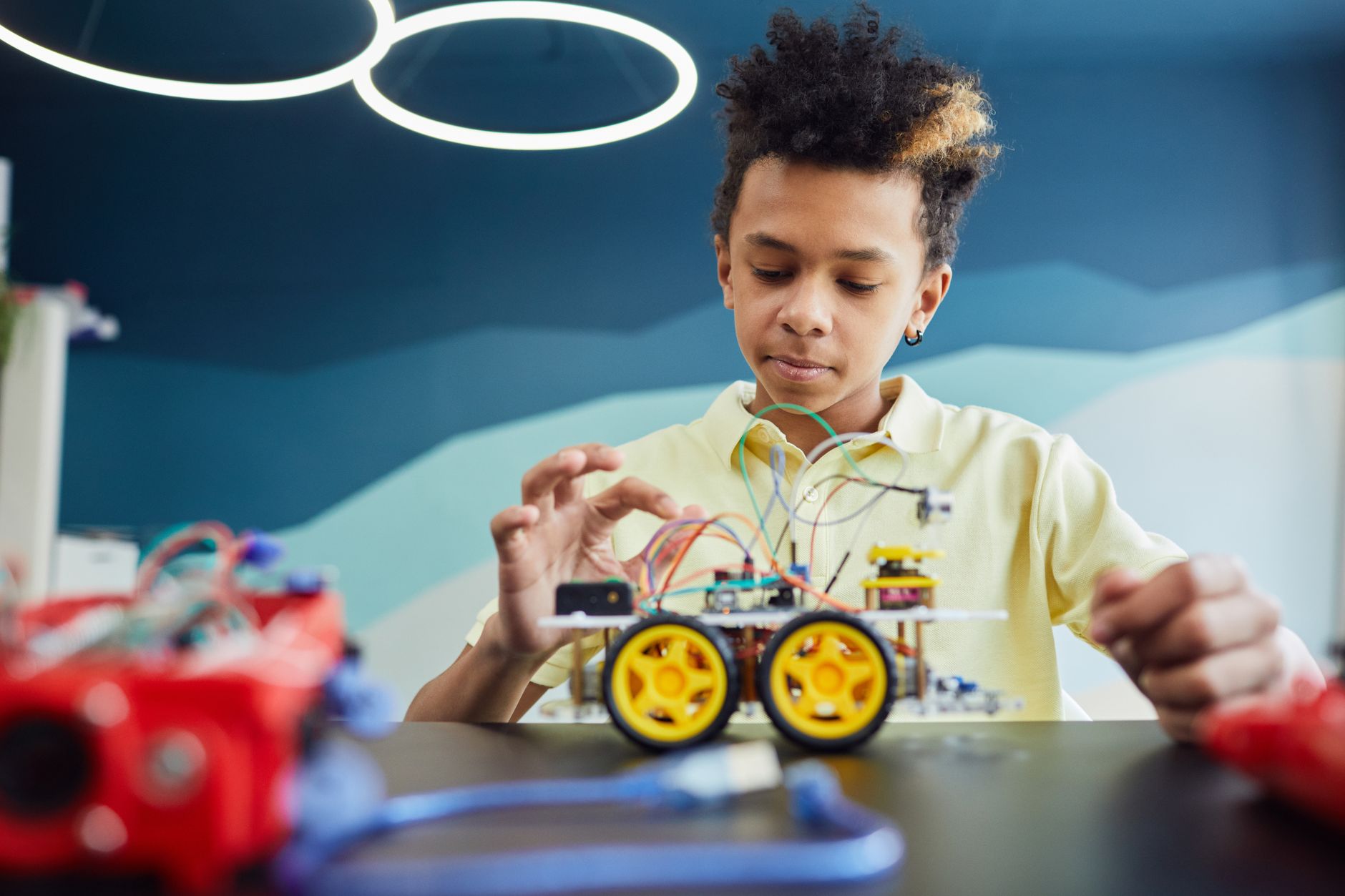
Many teenagers today have grown up with artificial intelligence all around them. Seven teenagers across the United States recently shared their views on AI in education. Their ideas show how young people think about learning and living alongside this technology.
Some teenagers feel that AI can be a helpful tool in the classroom. If a student uses AI to explain a difficult topic, they will often understand it more quickly. Others worry that AI makes it too easy to avoid real thinking. They believe that if students rely on AI for every answer, they will not develop important skills.
Growing up in the age of AI is a new experience for young people. These teenagers said that AI is already part of their daily lives. They use it for schoolwork, for finding information, and sometimes just to talk through ideas. It seems that most of them see both possibilities and problems with AI in education.
The question of how to use AI well is important. If schools find the right balance, students will benefit from AI without losing their ability to think independently. Young people like these seven teenagers are already asking the right questions. Their views can help teachers and schools make better decisions about AI in the future.
Highlighted sentences show the grammar focus structure.
Key Vocabulary
artificial
/ˌɑːrtɪˈfɪʃəl/
Made or created by people rather than happening naturally.
The park uses artificial flowers in the winter because real ones cannot survive the cold.
rely
/rɪˈlaɪ/
To need or depend on someone or something for help or support.
She relies on her bicycle to get to work every morning because she doesn't have a car.
benefit
/ˈbenɪfɪt/
To get something good or useful from a situation or action.
Children who read every day benefit greatly when they start learning new languages.
independently
/ˌɪndɪˈpendəntli/
In a way that is free from the help or control of other people.
After a few months of practice, he was able to cook a full meal independently without asking for help.
balance
/ˈbæləns/
A situation where two or more things are given equal or appropriate attention.
It can be hard to find a good balance between work and spending time with your family.
develop
/dɪˈveləp/
To slowly grow or build a skill, idea, or quality over time.
Playing team sports can help young people develop confidence and communication skills.
| Image | Word | IPA | Definition | Example |
|---|---|---|---|---|
artificial | /ˌɑːrtɪˈfɪʃəl/ | Made or created by people rather than happening naturally. | The park uses artificial flowers in the winter because real ones cannot survive the cold. | |
rely | /rɪˈlaɪ/ | To need or depend on someone or something for help or support. | She relies on her bicycle to get to work every morning because she doesn't have a car. | |
benefit | /ˈbenɪfɪt/ | To get something good or useful from a situation or action. | Children who read every day benefit greatly when they start learning new languages. | |
independently | /ˌɪndɪˈpendəntli/ | In a way that is free from the help or control of other people. | After a few months of practice, he was able to cook a full meal independently without asking for help. | |
balance | /ˈbæləns/ | A situation where two or more things are given equal or appropriate attention. | It can be hard to find a good balance between work and spending time with your family. | |
develop | /dɪˈveləp/ | To slowly grow or build a skill, idea, or quality over time. | Playing team sports can help young people develop confidence and communication skills. |
Grammar Spotlight
First Conditional — Real Future Situations
If + present simple, will + base verb
When do we use it?
- Use it to talk about a real or likely situation in the future and its probable result.
- Use it when you want to show that one future action depends on another condition being true.
- Use it to give warnings, make offers, or discuss consequences — common in everyday conversation.
How is it formed?
If + subject + present simple+subject + will + base verb
The 'if' clause can come first or second in the sentence.
★Real possibility now → real result in the future
See it in action
If students use AI tools wisely, they will learn more effectively.
Teenagers will rely on AI more if schools start using it every day.
If AI helps with homework, teachers will have more time for discussion.
If young people understand AI, they will feel more confident about the future.
Remember this
✗If students will use AI, they will learn more.
✓If students use AI, they will learn more.
Never use 'will' in the 'if' clause. Use present simple there, even though you mean the future.
✗If AI helps students, teachers would have more time.
✓If AI helps students, teachers will have more time.
'Would' belongs to the second conditional (unreal situations). Use 'will' for real, likely future results.
✗If teenagers will understand AI, they will feel confident.
✓If teenagers understand AI, they will feel confident.
The 'if' clause always takes present simple — no 'will', no matter how future the meaning feels.
Discussion Questions
- 1.
Do students in your country use AI tools for schoolwork? What do teachers and parents think about this?
- 2.
Have you ever used AI to help you learn something new or solve a problem? What happened, and did you find it useful?
- 3.
What do you think is the right balance between using technology and working independently in everyday life?
Comprehension Questions
- 1.
How many teenagers shared their views on AI in education?
- 2.
Why do some teenagers worry about using AI for schoolwork?
- 3.
What are three ways the teenagers said they use AI in their daily lives?
- 4.
Is finding the right balance with AI described as easy or difficult in the article?
- 5.
Who can benefit from the views of these seven teenagers, according to the article?
View answers for the comprehension questions
- 1.Seven teenagers from across the United States shared their views on AI in education.
- 2.Some teenagers worry that if students rely on AI for every answer, they will not develop important skills and will avoid real thinking.
- 3.The teenagers said they use AI for schoolwork, for finding information, and sometimes to talk through ideas.
- 4.The article does not say it is easy. It suggests that finding the right balance is an important challenge for schools, implying it requires careful thought and effort.
- 5.According to the article, teachers and schools can benefit from the teenagers' views, as they can help make better decisions about AI in the future.
Test your knowledge
Question 1Fill-in-the-blank
Living near a park can really ____ your health because you can walk and exercise every day.
Question 2Fill-in-the-blank
It is important to find a good ____ between working hard and getting enough rest each day.
Question 3Fill-in-the-blank
Children who read a lot tend to ____ strong language skills over time.
Question 4Fill-in-the-blank
She prefers to work ____ so she can make her own decisions without asking for help.
View answers for test your knowledge
- 1.benefit
- 2.balance
- 3.develop
- 4.independently
Practice this topic live
Use what you’ve learned in a real 1:1 English conversation with an experienced Talk4Impact tutor.
Practice with tutor