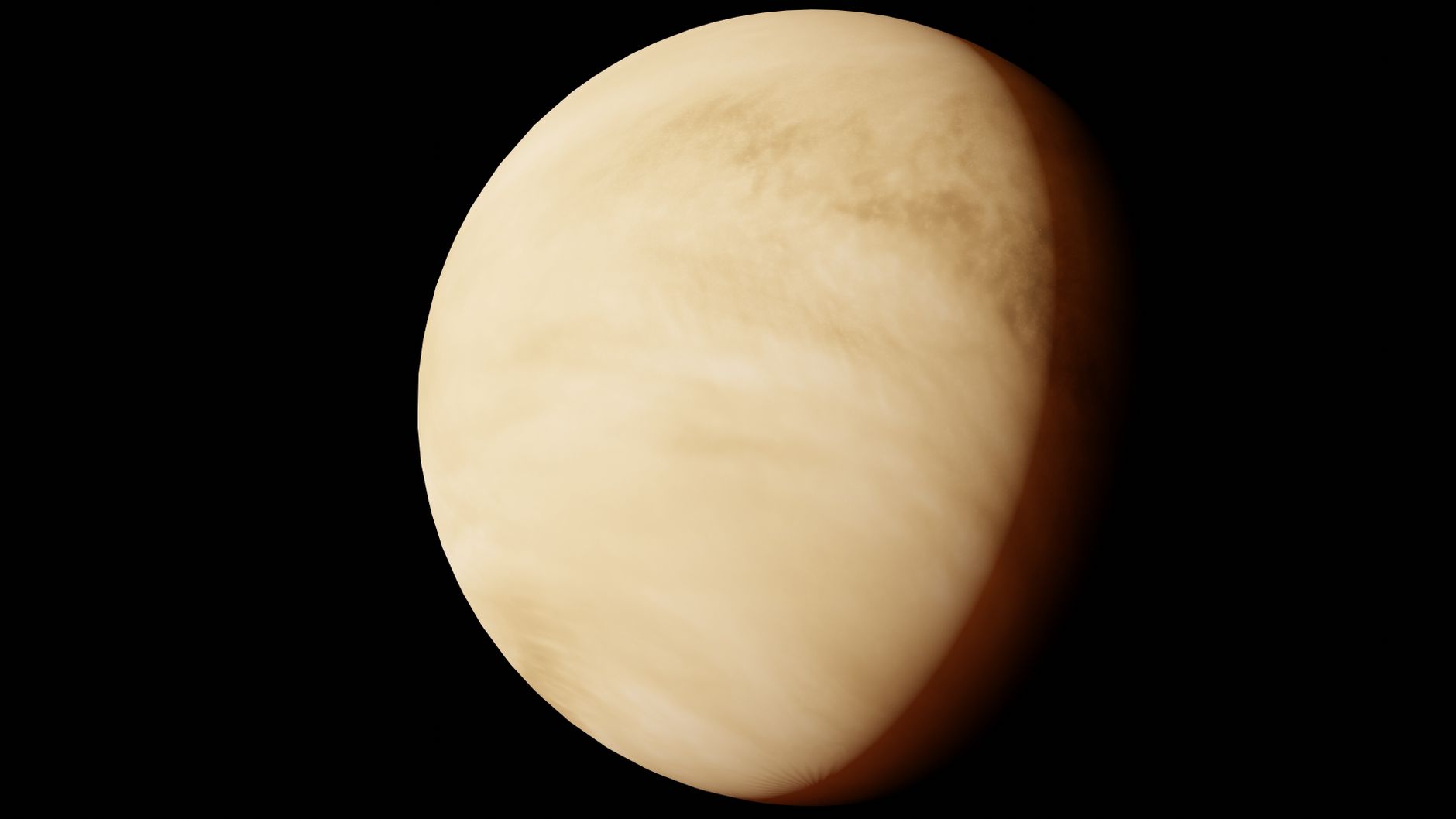
Discovery of an atmosphere on a rocky planet in a habitable zone
Level
b1
Topic
science
Read this at a different level:b2c1
Scientists have just made one of the most exciting discoveries in space research. They have found an atmosphere on a rocky planet that orbits within the habitable zone of a distant star. This is the first time researchers have ever detected an atmosphere on this type of planet in such a zone.
The habitable zone is the region around a star where conditions might allow liquid water to exist. A rocky planet in this zone is similar in some ways to Earth. Scientists have studied many planets over the years, but they have never found an atmosphere like this on a rocky world in a habitable zone before. This discovery changes what we know about planets beyond our solar system.
So, why does an atmosphere matter? Without one, a planet cannot hold heat or protect its surface. If a planet has an atmosphere, it is more likely to support the conditions that life needs. Scientists have not yet confirmed whether this planet can support life. But the discovery is still a very important step forward.
Researchers around the world have already started to study the data more carefully. They want to find out what the atmosphere is made of. This work will take time, since space research is slow and complex. But for now, this discovery gives scientists a new reason to look more closely at rocky planets in habitable zones.
Highlighted sentences show the grammar focus structure.
Key Vocabulary
atmosphere
/ˈætməsfɪr/
The layer of gases that surrounds a planet and is held in place by gravity.
The Earth's atmosphere protects us from harmful rays coming from the sun.
detect
/dɪˈtɛkt/
To discover or notice something that is not easy to see or find.
The smoke alarm can detect even a small amount of smoke in the room.
orbit
/ˈɔːrbɪt/
To travel in a curved path around a larger object, such as a planet or star.
The Moon takes about 27 days to orbit the Earth.
confirm
/kənˈfɜːrm/
To say or show that something is definitely true or correct.
The doctor called to confirm that my test results were normal.
discovery
/dɪˈskʌvəri/
Something that has been found or learned for the first time.
The discovery of penicillin changed the way doctors treat infections.
complex
/ˈkɒmplɛks/
Having many different parts or details that make something difficult to understand or deal with.
Learning a new language can be complex, but it becomes easier with regular practice.
| Image | Word | IPA | Definition | Example |
|---|---|---|---|---|
atmosphere | /ˈætməsfɪr/ | The layer of gases that surrounds a planet and is held in place by gravity. | The Earth's atmosphere protects us from harmful rays coming from the sun. | |
detect | /dɪˈtɛkt/ | To discover or notice something that is not easy to see or find. | The smoke alarm can detect even a small amount of smoke in the room. | |
orbit | /ˈɔːrbɪt/ | To travel in a curved path around a larger object, such as a planet or star. | The Moon takes about 27 days to orbit the Earth. | |
confirm | /kənˈfɜːrm/ | To say or show that something is definitely true or correct. | The doctor called to confirm that my test results were normal. | |
discovery | /dɪˈskʌvəri/ | Something that has been found or learned for the first time. | The discovery of penicillin changed the way doctors treat infections. | |
complex | /ˈkɒmplɛks/ | Having many different parts or details that make something difficult to understand or deal with. | Learning a new language can be complex, but it becomes easier with regular practice. |
Grammar Spotlight
Present Perfect Simple
have / has + past participle
When do we use it?
- Use it to talk about a past experience when the exact time is not important or not mentioned — e.g. things you have ever or never done.
- Use it when a past action has a clear result or effect on the present — e.g. scientists have just made a discovery (and we can see the impact now).
- Use it with time expressions like for, since, already, yet, just, ever, and never to show how an action connects to the present moment.
How is it formed?
have / has+past participle
Use 'has' with he / she / it; use 'have' with I / you / we / they
★Past action — present connection!
See it in action
Scientists have just made one of the most exciting discoveries in space research.
Researchers have never detected an atmosphere on this type of planet before.
The team has already published its findings in a major science journal.
We have studied distant stars for many years, but this discovery is truly new.
Remember this
'For' is followed by a period of time (for ten years); 'since' is followed by a point in time (since 2010). 'Yet' is used in questions and negatives; 'already' and 'just' are used in positive statements to show something happened sooner than expected or very recently.
forsinceeverneveryetalreadyjustrecentlyso far
Discussion Questions
- 1.
Have you ever looked up at the night sky and wondered about life on other planets? What do people in your country generally think about the idea of life existing somewhere else in space?
- 2.
What do you think is the most exciting area of science or technology in your country right now? Why does it interest you personally?
- 3.
If scientists one day confirm that life exists on another planet, how do you think people in your community or country would react? Would it change anything about daily life for you?
Comprehension Questions
- 1.
What did scientists find on a rocky planet in the habitable zone?
- 2.
Why is the habitable zone important for the possibility of life?
- 3.
How does an atmosphere help a planet support life?
- 4.
Have researchers confirmed that this planet can support life?
- 5.
What do researchers plan to do next with this discovery?
View answers for the comprehension questions
- 1.Scientists found an atmosphere on a rocky planet that orbits within the habitable zone of a distant star. This was the first time researchers had ever detected an atmosphere on this type of planet in such a zone.
- 2.The habitable zone is the region around a star where conditions might allow liquid water to exist. Liquid water is considered necessary for life, so a planet in this zone has a better chance of supporting it.
- 3.An atmosphere allows a planet to hold heat and protect its surface. Without one, a planet cannot maintain the conditions that life needs.
- 4.No, scientists have not yet confirmed whether the planet can support life. However, the discovery of an atmosphere is described as a very important step forward.
- 5.Researchers around the world have already started to study the data more carefully. They want to find out what the atmosphere is made of, though this work will take time because space research is slow and complex.
Test your knowledge
Question 1Fill-in-the-blank
The doctor used a special machine to ____ a small problem in the patient's heart.
Question 2Fill-in-the-blank
The weather forecast said the ____ would bring rain and strong winds to the region.
Question 3Fill-in-the-blank
The small satellite will ____ the Earth once every ninety minutes.
Question 4Fill-in-the-blank
The manager asked the team to ____ the meeting time before sending out the invitations.
View answers for test your knowledge
- 1.detect
- 2.atmosphere
- 3.orbit
- 4.confirm
Practice this topic live
Use what you’ve learned in a real 1:1 English conversation with an experienced Talk4Impact tutor.
Practice with tutor