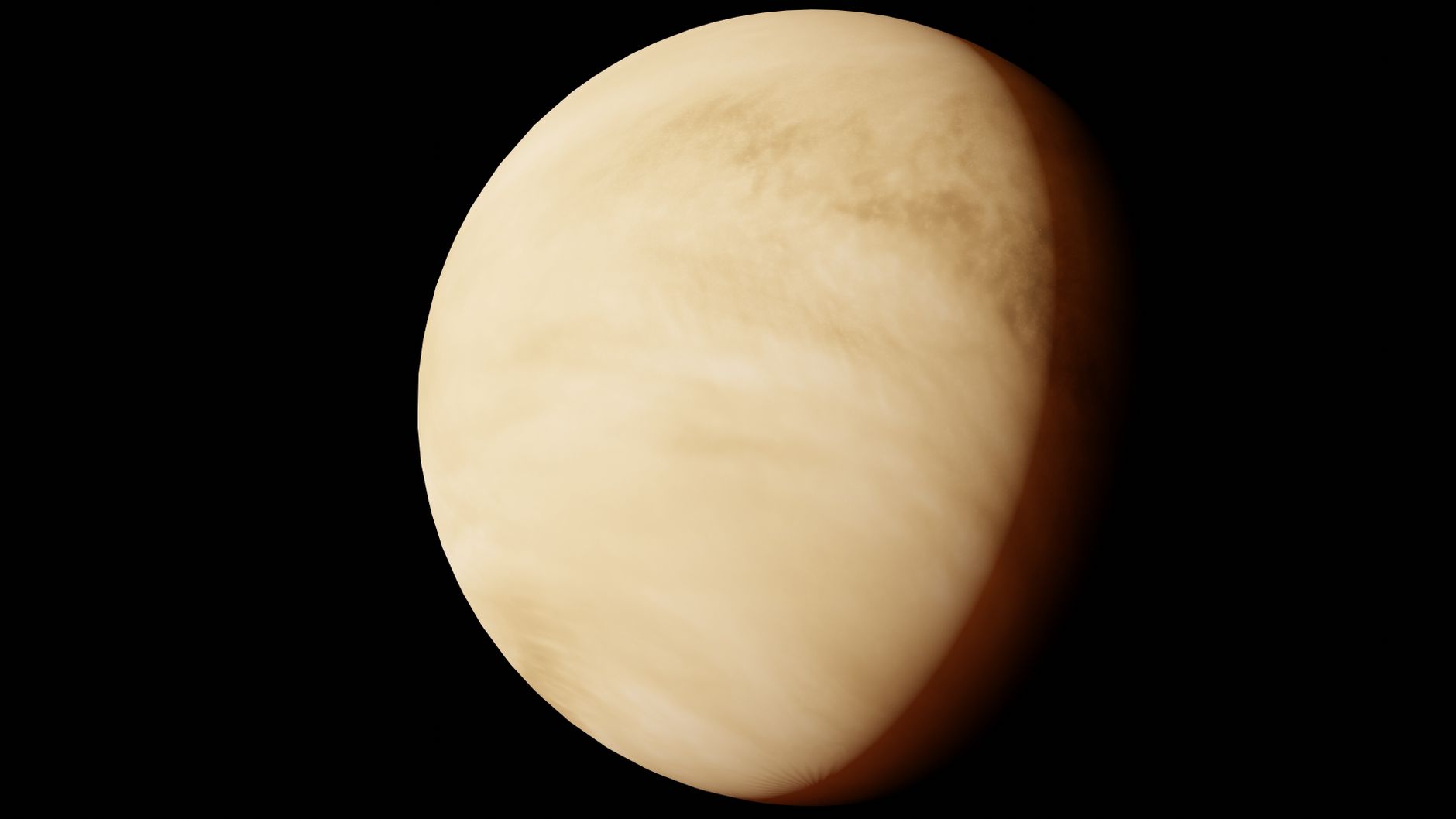
Discovery of an atmosphere on a rocky planet in a habitable zone
Level
b2
Topic
science
Read this at a different level:b1c1
For decades, scientists had assumed that finding an atmosphere on a small, rocky planet in a habitable zone was possible — but no confirmed example had ever been found. That assumption has now been tested by a remarkable discovery, which has shifted the conversation about life beyond Earth in a significant way.
Researchers have detected an atmosphere on a rocky, Earth-like planet orbiting within the habitable zone of a distant star. This is the first time such an atmosphere has been confirmed on this type of planet in a region where liquid water could theoretically exist. The habitable zone, which is sometimes called the "Goldilocks zone," refers to the range of distances from a star where surface temperatures are neither too hot nor too cold for water to remain liquid.
The significance of this finding is considerable. Previously, atmospheres had been detected on gas giants and other large planets, but rocky planets — which are far smaller and harder to study — had not yielded such clear evidence. Scientists had been searching for this kind of discovery for years, and many had begun to wonder whether the instruments available were simply not sensitive enough to detect it.
It should be noted that the discovery does not confirm the presence of life. Researchers have pointed out that an atmosphere is one necessary condition, not a guarantee. Nevertheless, the finding is widely regarded as a major step forward. The planet, whose exact composition is still being analyzed, will almost certainly become a priority target for further observation.
For the scientific community, this result might have seemed improbable just a few years ago. Now, it has opened a new chapter in the search for potentially habitable worlds — one that many researchers had hoped would come, but perhaps not quite so soon.
Highlighted sentences show the grammar focus structure.
Key Vocabulary
assume
/əˈsuːm/
To believe that something is true without having proof or checking it carefully.
Many people assume that learning a new language takes years, but with the right method, progress can come much faster.
habitable
/ˈhæbɪtəbəl/
Suitable for people or living things to live in, with the necessary conditions to support life.
After the flood, engineers assessed whether the damaged building was still habitable or needed to be demolished.
considerable
/kənˈsɪdərəbəl/
Large or important enough to be worth paying attention to; notably significant in size or degree.
The new transport policy has attracted considerable public debate, with thousands of people signing petitions both for and against it.
yield
/jiːld/
To produce or provide a result, piece of information, or amount of something.
The investigation into the company's finances yielded some surprising results that no one had expected.
sensitive
/ˈsɛnsɪtɪv/
Able to detect or measure very small changes or differences; highly responsive to input.
The new microphone is so sensitive that it can pick up sounds from the other side of a large room.
composition
/ˌkɒmpəˈzɪʃən/
The particular combination of parts, substances, or elements that something is made of.
The nutritionist analyzed the composition of the meal to determine how much protein and fat it contained.
improbable
/ɪmˈprɒbəbəl/
Not likely to happen or be true; difficult to believe because it seems unlikely.
It seemed improbable that a small local team would reach the national championship, yet they managed to do exactly that.
| Image | Word | IPA | Definition | Example |
|---|---|---|---|---|
assume | /əˈsuːm/ | To believe that something is true without having proof or checking it carefully. | Many people assume that learning a new language takes years, but with the right method, progress can come much faster. | |
habitable | /ˈhæbɪtəbəl/ | Suitable for people or living things to live in, with the necessary conditions to support life. | After the flood, engineers assessed whether the damaged building was still habitable or needed to be demolished. | |
considerable | /kənˈsɪdərəbəl/ | Large or important enough to be worth paying attention to; notably significant in size or degree. | The new transport policy has attracted considerable public debate, with thousands of people signing petitions both for and against it. | |
yield | /jiːld/ | To produce or provide a result, piece of information, or amount of something. | The investigation into the company's finances yielded some surprising results that no one had expected. | |
sensitive | /ˈsɛnsɪtɪv/ | Able to detect or measure very small changes or differences; highly responsive to input. | The new microphone is so sensitive that it can pick up sounds from the other side of a large room. | |
composition | /ˌkɒmpəˈzɪʃən/ | The particular combination of parts, substances, or elements that something is made of. | The nutritionist analyzed the composition of the meal to determine how much protein and fat it contained. | |
improbable | /ɪmˈprɒbəbəl/ | Not likely to happen or be true; difficult to believe because it seems unlikely. | It seemed improbable that a small local team would reach the national championship, yet they managed to do exactly that. |
Grammar Spotlight
Non-defining Relative Clauses
noun + , who / which / whose / where , + extra info
When do we use it?
- Use a non-defining relative clause to add extra, non-essential information about a noun that is already clearly identified — removing the clause would not change the core meaning of the sentence.
- Choose 'who' for people, 'which' for things or ideas, 'whose' to show possession, and 'where' for places — and never use 'that' in non-defining clauses.
- Use this structure to make writing more sophisticated by combining two related ideas into one sentence without losing clarity.
How is it formed?
noun (already identified)+, who / which / whose / where + extra information ,+main clause continues
Commas are essential — they signal the clause is extra, not defining
★Add bonus info — commas in, 'that' out!
See it in action
The discovery, which was announced last week, has changed how scientists think about life beyond Earth.
The lead researcher, who has studied exoplanets for over twenty years, described the findings as extraordinary.
The planet's atmosphere, whose composition surprised even veteran scientists, contains gases linked to biological processes.
The observatory in Chile, where the telescope captured the data, sits at an altitude of 5,000 metres.
Remember this
Defining relative clause (no commas)
- •The planet that orbits in the habitable zone may support life. (tells us WHICH planet)
- •Scientists who study exoplanets are excited by the discovery. (tells us WHICH scientists)
Non-defining relative clause (with commas)
- •Kepler-452b, which orbits in the habitable zone, may support life. (adds bonus info about an already-named planet)
- •Dr Patel, who studies exoplanets, is excited by the discovery. (adds bonus info about an already-named person)
If you can remove the relative clause and the sentence still clearly identifies its subject, use commas — it is non-defining.
Discussion Questions
- 1.
To what extent do you think space exploration should be a priority for your country's government, given the many challenges people face here on Earth?
- 2.
How did people around you — in your family, school, or community — react when you were growing up to news about space discoveries or science in general? Did those reactions shape your own interest in science?
- 3.
In what ways might the possibility of life on other planets change how people in your culture think about humanity's place in the universe?
- 4.
What factors do you think make it difficult for young people in your country to pursue careers in science or research, and how might those obstacles be reduced?
Comprehension Questions
- 1.
Why was the detection of an atmosphere on this particular planet considered more difficult than detecting atmospheres on other types of planets?
- 2.
What does the term 'Goldilocks zone' refer to, and why is that name appropriate?
- 3.
How does the article suggest scientists' expectations about this kind of discovery had changed over time?
- 4.
Could the discovery of an atmosphere on this planet be taken as proof that life exists there?
- 5.
What might have happened to the scientific community's confidence in this line of research if the instruments had remained too limited to detect such an atmosphere?
View answers for the comprehension questions
- 1.Rocky planets are far smaller than gas giants, making them much harder to study. Scientists had even begun to question whether their instruments were sensitive enough to detect atmospheric evidence on such planets.
- 2.The Goldilocks zone refers to the range of distances from a star where surface temperatures are neither too hot nor too cold for liquid water to exist. The name is appropriate because, like the fairy tale, it describes conditions that are 'just right' for life-supporting water.
- 3.The article implies that just a few years ago, many scientists would have considered such a discovery improbable. However, the tone shifts to suggest that the discovery arrived sooner than even hopeful researchers had anticipated.
- 4.No, it could not. Researchers explicitly point out that an atmosphere is one necessary condition for life, not a guarantee of it, and the planet's exact composition is still being analyzed.
- 5.Based on the article, it is likely that doubt would have grown further, since scientists had already begun to wonder whether available instruments were simply not sensitive enough. The search for habitable worlds might have stalled or lost credibility without this kind of confirmation.
Test your knowledge
Question 1Fill-in-the-blank
The new smoke detector is so ____ that it can pick up even a tiny amount of smoke from several rooms away.
Question 2Fill-in-the-blank
Many people ____ that learning a new language takes years, but with consistent daily practice, progress can come much faster.
Question 3Fill-in-the-blank
The chef explained that the ____ of the sauce — a blend of herbs, cream, and lemon — was what made it so distinctive.
Question 4Fill-in-the-blank
Winning three competitions in a row seemed ____ at the start of the season, but the team's hard work made it possible.
Question 5Fill-in-the-blank
Before renting the apartment, the inspector checked whether the building was truly ____ by testing the heating system and water supply.
View answers for test your knowledge
- 1.sensitive
- 2.assume
- 3.composition
- 4.improbable
- 5.habitable
Practice this topic live
Use what you’ve learned in a real 1:1 English conversation with an experienced Talk4Impact tutor.
Practice with tutor