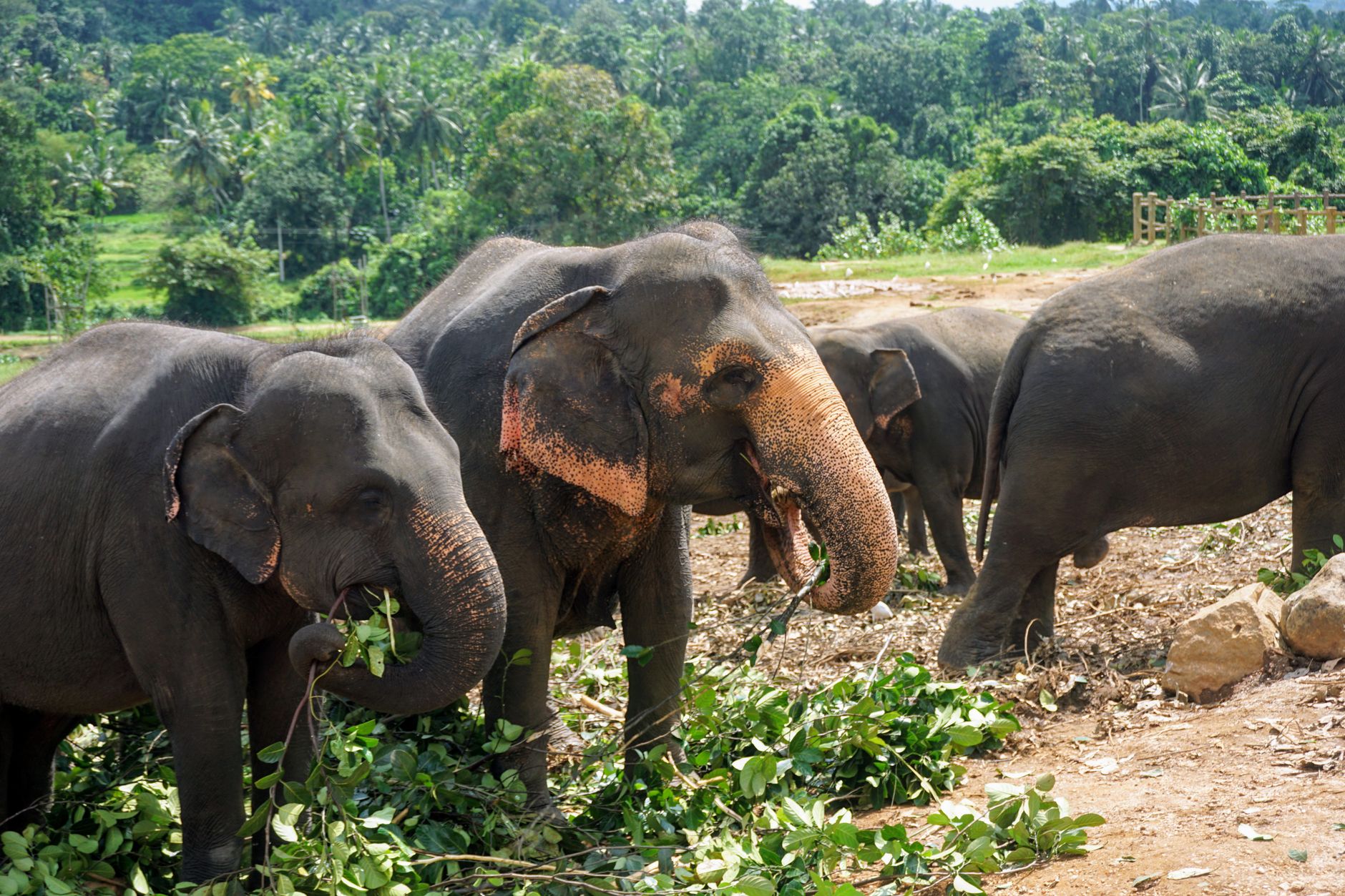
Elephants using medicinal plants for self-treatment
Level
b1
Topic
science
Read this at a different level:b2
Elephants are intelligent animals, and scientists have known this for a long time. But researchers have recently discovered something surprising. African elephants use dozens of medicinal plants to treat their own illnesses. This behaviour is called zoopharmacognosy, which means self-medication in animals.
In the past, scientists used to think that only humans searched for medicine when they felt sick. Now, researchers have documented that elephants do this too. They have observed elephants in the wild choosing specific plants that have healing properties. These are not plants that elephants eat every day. The elephants seem to know which plant can help with a particular problem.
What is even more remarkable is that elephants also treat sick family members. They do not just look after themselves. If another elephant in the group is unwell, a healthy elephant may bring medicinal plants to help. This shows a level of care that scientists find very interesting.
People used to believe that animals acted only on basic instinct. But this research suggests that elephants have a deeper understanding of the natural world. Scientists are still doing research to find out more about how elephants learn this behaviour. If we understand this better, we will learn a great deal about animal intelligence. Elephants continue to surprise us.
Highlighted sentences show the grammar focus structure.
Key Vocabulary
researcher
/ˈriːsɜːrtʃər/
A person whose job is to study a subject carefully in order to find new information about it.
The researchers spent three years collecting data from schools across the country.
medicinal
/məˈdɪsɪnəl/
Describing something, especially a plant or substance, that is used to treat illness or improve health.
My grandmother often made tea from medicinal herbs she grew in her garden.
document
/ˈdɒkjəment/
To record information about something carefully so that it can be studied or referred to later.
The nurse documented every change in the patient's condition throughout the night.
remarkable
/rɪˈmɑːrkəbəl/
Describing something that is unusual or surprising in a way that makes people notice and admire it.
It was remarkable how quickly the young girl learned to play the piano.
instinct
/ˈɪnstɪŋkt/
A natural ability or feeling that makes a person or animal behave in a certain way without thinking or learning.
The mother's instinct told her that something was wrong with her child.
look after
/lʊk ˈæftər/
To take care of someone or something and make sure they are safe and well.
My neighbour agreed to look after my cat while I was on holiday.
| Image | Word | IPA | Definition | Example |
|---|---|---|---|---|
researcher | /ˈriːsɜːrtʃər/ | A person whose job is to study a subject carefully in order to find new information about it. | The researchers spent three years collecting data from schools across the country. | |
medicinal | /məˈdɪsɪnəl/ | Describing something, especially a plant or substance, that is used to treat illness or improve health. | My grandmother often made tea from medicinal herbs she grew in her garden. | |
document | /ˈdɒkjəment/ | To record information about something carefully so that it can be studied or referred to later. | The nurse documented every change in the patient's condition throughout the night. | |
remarkable | /rɪˈmɑːrkəbəl/ | Describing something that is unusual or surprising in a way that makes people notice and admire it. | It was remarkable how quickly the young girl learned to play the piano. | |
instinct | /ˈɪnstɪŋkt/ | A natural ability or feeling that makes a person or animal behave in a certain way without thinking or learning. | The mother's instinct told her that something was wrong with her child. | |
look after | /lʊk ˈæftər/ | To take care of someone or something and make sure they are safe and well. | My neighbour agreed to look after my cat while I was on holiday. |
Grammar Spotlight
'Used to' for Past Habits and States
used to + base verb
When do we use it?
- Use 'used to' to talk about habits or repeated actions in the past that no longer happen today.
- Use it to describe states or situations in the past that were true for a period of time but have since changed.
- It signals a contrast between the past and the present — things were different then.
How is it formed?
subject+used to+base verb (infinitive)
'used to' is always the same form — no changes for he/she/it
★Past only — it doesn't happen now!
See it in action
Elephants used to be studied only in zoos, but now researchers observe them in the wild.
Scientists used to think that self-medication was unique to humans.
People used to ignore animal intelligence, but attitudes have changed a lot.
African elephants used to be seen as simple creatures before zoopharmacognosy was discovered.
Remember this
✗I use to live near the forest.
✓I used to live near the forest.
Always write 'used to' with a -d, even though it sounds like 'use to' when spoken.
✗Did you used to study elephants?
✓Did you use to study elephants?
After the auxiliary 'did', drop the -d and use the base form: 'use to', not 'used to'.
✗Elephants used to can find medicinal plants.
✓Elephants used to find medicinal plants.
'Used to' is already a modal-like structure — follow it directly with a base verb, never another modal.
Discussion Questions
- 1.
Have you ever used a natural plant or traditional remedy to treat an illness? What was it, and is this kind of treatment common in your country or culture?
- 2.
What do you think about animals being more intelligent than people expect? Can you think of any animals in your country that people consider to be especially clever or surprising?
- 3.
If you found out that an animal near your home was sick, what would you do? Would people in your community try to help it, or is that unusual where you live?
Comprehension Questions
- 1.
What is zoopharmacognosy, according to the article?
- 2.
Why do scientists find it remarkable that elephants bring plants to sick family members?
- 3.
How did scientists' beliefs about animals change after studying elephants?
- 4.
Do elephants eat the medicinal plants they choose every day?
- 5.
What do scientists hope to learn by studying this behaviour further?
View answers for the comprehension questions
- 1.Zoopharmacognosy is the behaviour of animals treating their own illnesses using medicinal plants. The article describes it as self-medication in animals.
- 2.Scientists find it remarkable because it shows that elephants do not just care for themselves — they also look after others in their group. This level of care suggests a deeper understanding than simple instinct.
- 3.In the past, scientists believed animals acted only on basic instinct. After observing elephants choosing specific medicinal plants, researchers now think elephants have a deeper understanding of the natural world.
- 4.No, the article says these are not plants that elephants eat every day. They seem to choose these specific plants only when they or another elephant needs help with a particular health problem.
- 5.Scientists hope to find out more about how elephants learn to use medicinal plants. Understanding this better will help them learn a great deal about animal intelligence in general.
Test your knowledge
Question 1Fill-in-the-blank
The doctor recommended a ____ tea made from herbs to help with the patient's sore throat.
Question 2Fill-in-the-blank
A baby bird has a natural ____ to open its mouth wide when it hears its parent nearby.
Question 3Fill-in-the-blank
The young student gave a ____ performance at the school concert and received a standing ovation.
Question 4Fill-in-the-blank
The ____ spent several months carefully studying the effects of sleep on memory.
View answers for test your knowledge
- 1.medicinal
- 2.instinct
- 3.remarkable
- 4.researcher
Practice this topic live
Use what you’ve learned in a real 1:1 English conversation with an experienced Talk4Impact tutor.
Practice with tutor