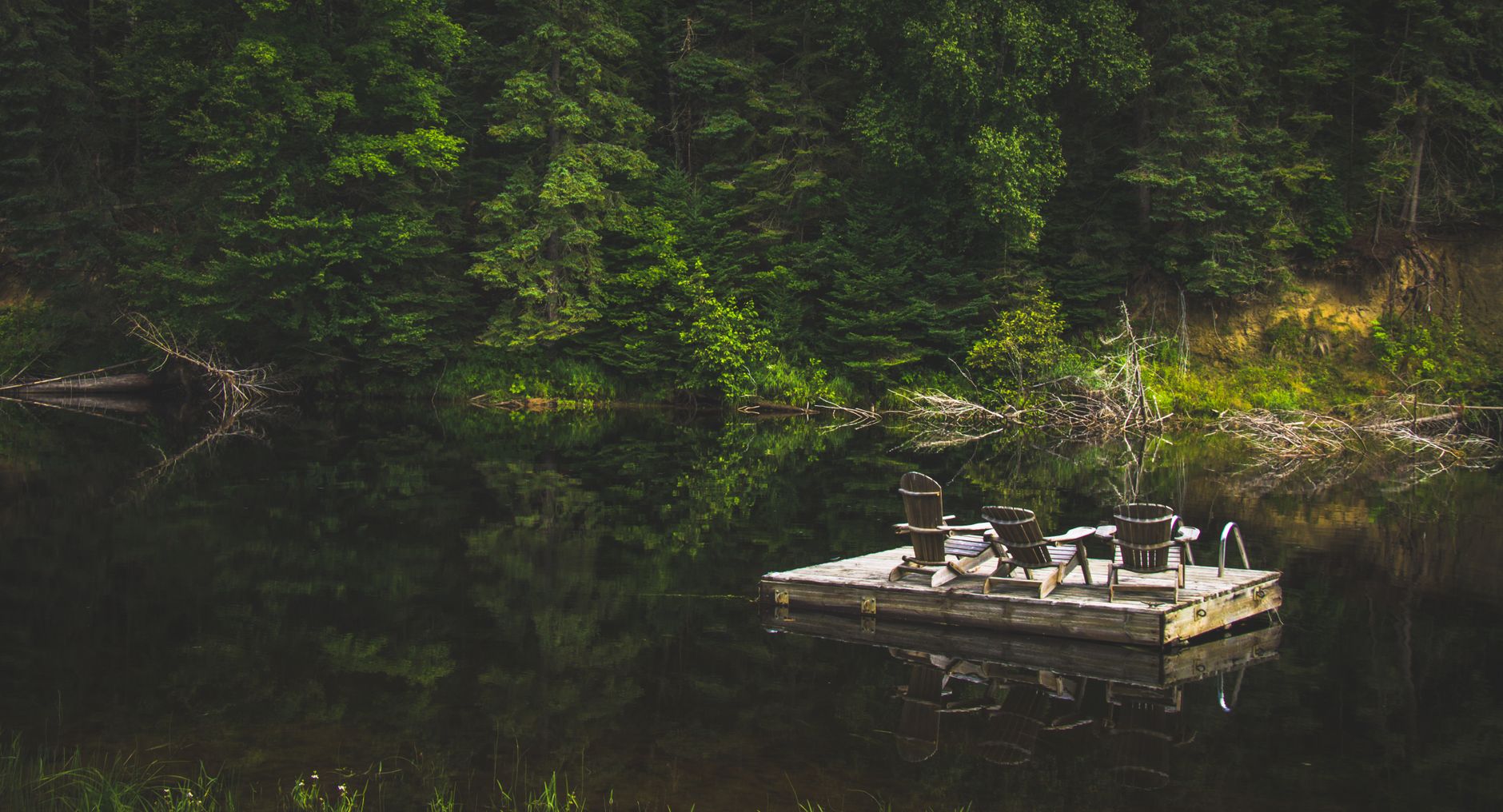
A floating island in a Canadian lake
Level
a2
Topic
science
Read this at a different level:b1b2c1
My friend Callum lives near a lake in British Columbia, Canada. Last month, he called me with a strange story. He was walking by the lake when he saw something unusual. A small island was floating on the water.
Callum told me the island disappeared some time ago. People were looking for it, but they could not find it. Then, one day, it came back. Officials were watching the lake when the island drifted slowly toward the shoreline. Callum said it was very strange to see.
Nobody knows where the island came from. Callum was talking to his neighbour about it last week. His neighbour did not know the answer either. Callum wants to go back to the lake soon. He is going to take some photos. He thinks the floating island is one of the most interesting things he ever saw.
Highlighted sentences show the grammar focus structure.
Key Vocabulary
lake
/leɪk/
A large area of water with land all around it.
We went swimming in the lake on a hot summer afternoon.
unusual
/ʌnˈjuːʒuəl/
Different from what is normal or expected.
The weather was unusual for April — it was very warm and sunny.
float
/floʊt/
To stay on top of water without sinking.
The children watched their toy boats float across the pond.
disappear
/ˌdɪsəˈpɪr/
To stop being visible or to go somewhere that people cannot find.
My keys disappeared, and I looked everywhere in the house.
shoreline
/ˈʃɔːrlaɪn/
The edge of a large area of water, where the water meets the land.
We walked along the shoreline and collected small shells.
| Image | Word | IPA | Definition | Example |
|---|---|---|---|---|
lake | /leɪk/ | A large area of water with land all around it. | We went swimming in the lake on a hot summer afternoon. | |
unusual | /ʌnˈjuːʒuəl/ | Different from what is normal or expected. | The weather was unusual for April — it was very warm and sunny. | |
float | /floʊt/ | To stay on top of water without sinking. | The children watched their toy boats float across the pond. | |
disappear | /ˌdɪsəˈpɪr/ | To stop being visible or to go somewhere that people cannot find. | My keys disappeared, and I looked everywhere in the house. | |
shoreline | /ˈʃɔːrlaɪn/ | The edge of a large area of water, where the water meets the land. | We walked along the shoreline and collected small shells. |
Grammar Spotlight
Past Continuous — Basic Uses
was / were + verb-ing
When do we use it?
- Use it to describe an action that was in progress at a specific moment in the past — it had already started and had not finished yet.
- Use it to show a longer background action that was happening when a shorter action interrupted it (often with 'when').
- Use it to set the scene in a story — to describe what was going on around the main events.
How is it formed?
was / were+verb + -ing
Use 'was' with I / he / she / it; use 'were' with you / we / they
★Action in progress? was/were + verb-ing!
See it in action
Callum was walking by the lake when he saw something unusual.
A small island was floating on the water.
People were looking for the island, but they could not find it.
While Callum was talking to me, he was still feeling nervous.
Remember this
1
Background action starts
The longer action begins before the key moment — e.g. Callum started walking by the lake.
2
Action in progress (Past Continuous)
The action is still happening — 'He was walking' — this is the Past Continuous moment.
3
Interruption (Past Simple)
A shorter event cuts in — 'he saw something unusual' — this uses Past Simple, not Past Continuous.
4
Background action ends
The longer action eventually stops, but we focus on the moment it was interrupted.
Discussion Questions
- 1.
Are there any lakes, rivers, or other interesting natural places near your home or in your country? What do people do there?
- 2.
Did you ever see something unusual or surprising in nature? What did you see, and where were you?
- 3.
Would you like to take photos of interesting places? What kind of places do you like to photograph?
Comprehension Questions
- 1.
Where does Callum live?
- 2.
What was floating on the water?
- 3.
Who was watching when the island came back?
- 4.
Why does Callum want to go back to the lake?
View answers for the comprehension questions
- 1.Callum lives near a lake in British Columbia, Canada.
- 2.A small island was floating on the water.
- 3.Officials were watching the lake when the island drifted back toward the shoreline.
- 4.He wants to go back because he wants to take some photos of the floating island.
Test your knowledge
Question 1Fill-in-the-blank
The children swam and played near the ____ all afternoon.
Question 2Fill-in-the-blank
She looked everywhere, but her keys seemed to ____.
Question 3Fill-in-the-blank
A small piece of wood will ____ if you put it in water.
Question 4Fill-in-the-blank
They walked along the ____ and watched the waves.
View answers for test your knowledge
- 1.lake
- 2.disappear
- 3.float
- 4.shoreline
Practice this topic live
Use what you’ve learned in a real 1:1 English conversation with an experienced Talk4Impact tutor.
Practice with tutor