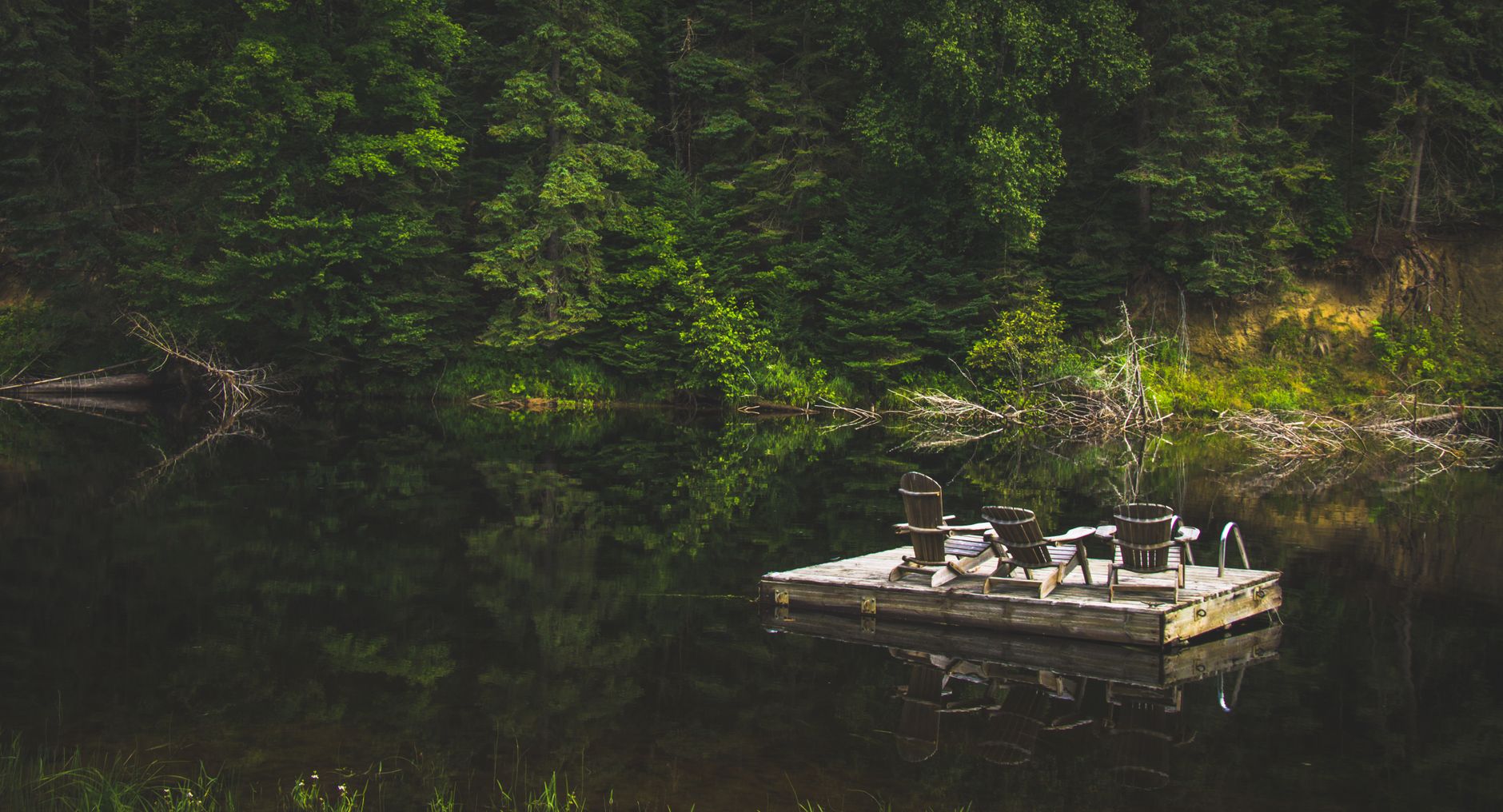
A floating island in a Canadian lake
Level
b1
Topic
science
Read this at a different level:a2b2c1
A strange and fascinating story has come from British Columbia, Canada. A floating island appeared on a local lake, then disappeared, and was later found again. Scientists and local officials have been trying to understand what happened.
Officials say the island drifted toward the shoreline of the lake. This is already surprising, but what makes the story even more interesting is that nobody knows where the island came from. The origins of the floating island remain completely unknown. If scientists find new information, they will be able to explain this mystery. Until then, people can only guess.
Floating islands are rare, but they do exist in nature. They are usually made of thick layers of plants and soil. These layers can break away from the bottom of a lake and rise to the surface. If a floating island moves close to the shore, local people will notice it quickly. That is exactly what happened here.
This story has made many people curious about natural events that we still do not fully understand. Some things in nature surprise us, even today. If you visit British Columbia and see the lake, you might spot something unusual near the water's edge. For now, the floating island remains one of nature's small but wonderful mysteries.
Highlighted sentences show the grammar focus structure.
Key Vocabulary
drift
/drɪft/
to move slowly on water or in the air without being controlled.
The small boat began to drift away from the dock when nobody was holding it.
shoreline
/ˈʃɔːrlaɪn/
the edge of a lake, sea, or ocean where the water meets the land.
We walked along the shoreline and collected shells as the waves came in.
origin
/ˈɒrɪdʒɪn/
the place or situation where something first began or came from.
The teacher asked the students to research the origin of their family names.
layer
/ˈleɪər/
a flat amount of something that covers a surface or lies between other things.
She put a thick layer of butter on her toast before adding the jam.
surface
/ˈsɜːrfɪs/
the top or outside part of something, especially the top of a liquid.
The diver came up to the surface of the water to take a breath.
curious
/ˈkjʊəriəs/
wanting to know or learn more about something because it interests you.
The children were very curious about how the magician made the coin disappear.
| Image | Word | IPA | Definition | Example |
|---|---|---|---|---|
drift | /drɪft/ | to move slowly on water or in the air without being controlled. | The small boat began to drift away from the dock when nobody was holding it. | |
shoreline | /ˈʃɔːrlaɪn/ | the edge of a lake, sea, or ocean where the water meets the land. | We walked along the shoreline and collected shells as the waves came in. | |
origin | /ˈɒrɪdʒɪn/ | the place or situation where something first began or came from. | The teacher asked the students to research the origin of their family names. | |
layer | /ˈleɪər/ | a flat amount of something that covers a surface or lies between other things. | She put a thick layer of butter on her toast before adding the jam. | |
surface | /ˈsɜːrfɪs/ | the top or outside part of something, especially the top of a liquid. | The diver came up to the surface of the water to take a breath. | |
curious | /ˈkjʊəriəs/ | wanting to know or learn more about something because it interests you. | The children were very curious about how the magician made the coin disappear. |
Grammar Spotlight
First Conditional — Real Future Situations
If + present simple, will + base verb
When do we use it?
- Use it to talk about a real or likely situation in the future and its probable result — you genuinely think it could happen.
- Use it to make predictions, warnings, or offers that depend on a condition being true.
- Use it when one future event is connected to another — if A happens, B will follow.
How is it formed?
If + subject + present simple verb+subject + will + base verb
The 'if' clause can come first or second — swap the order and drop the comma when it comes second.
★Real possibility now → real result in the future
See it in action
If the floating island drifts toward the shore again, scientists will study it immediately.
The island will disappear again if the water levels rise too quickly.
If officials find the island, they will try to understand what caused it to move.
If you visit British Columbia, you will probably hear this strange story.
Remember this
✗If the island will drift closer, scientists will investigate.
✓If the island drifts closer, scientists will investigate.
Never use 'will' in the 'if' clause — use present simple there, even though you are talking about the future.
✗If officials will find the island, they study it.
✓If officials find the island, they will study it.
'Will' belongs in the result clause, not the 'if' clause. The result clause needs 'will + base verb'.
✗If the island disappears, it would be a mystery.
✓If the island disappears, it will be a mystery.
'Would' signals the second conditional (unreal/hypothetical). Use 'will' for real, likely future situations.
Discussion Questions
- 1.
Have you ever seen or heard about an unusual natural event in your country? What happened, and how did people react?
- 2.
What do you think about mysteries in nature — do you find them exciting or a little frightening? Why?
- 3.
Are there any places in your country where people go to see interesting or surprising things in nature? Would you like to visit a place like that?
Comprehension Questions
- 1.
Where did the floating island first appear?
- 2.
Why do scientists not fully understand the floating island story?
- 3.
How do floating islands form in nature?
- 4.
What happened after the island disappeared?
- 5.
Is it possible for scientists to explain this mystery in the future?
View answers for the comprehension questions
- 1.The floating island appeared on a local lake in British Columbia, Canada.
- 2.Scientists do not fully understand it because the origins of the floating island remain completely unknown, and no new information has been found yet.
- 3.Floating islands are usually made of thick layers of plants and soil that break away from the bottom of a lake and rise to the surface.
- 4.After the island disappeared, it was later found again, and scientists and local officials began trying to understand what had happened.
- 5.Yes, the article says that if scientists find new information, they will be able to explain the mystery of the floating island.
Test your knowledge
Question 1Fill-in-the-blank
The swimmer came up to the ____ of the water and took a deep breath.
Question 2Fill-in-the-blank
The child was very ____ about how aeroplanes stay in the sky, and kept asking questions.
Question 3Fill-in-the-blank
People were walking along the ____ and watching the waves come in.
Question 4Fill-in-the-blank
The historian tried to find the ____ of the old painting, but no one knew where it came from.
View answers for test your knowledge
- 1.surface
- 2.curious
- 3.shoreline
- 4.origin
Practice this topic live
Use what you’ve learned in a real 1:1 English conversation with an experienced Talk4Impact tutor.
Practice with tutor