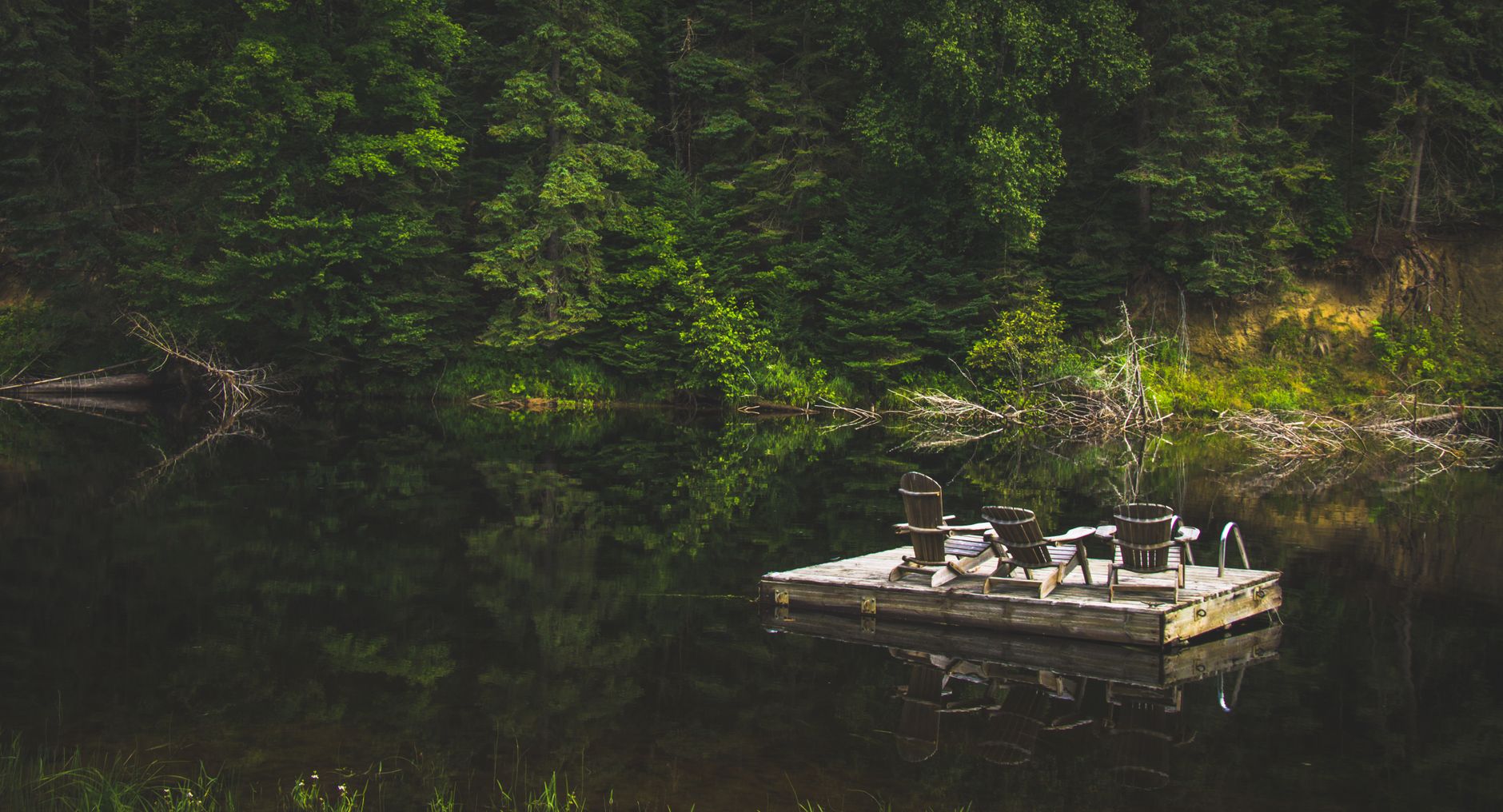
A floating island in a Canadian lake
Level
b2
Topic
science
Read this at a different level:a2b1c1
Most lakes stay exactly where they are. The water moves, but the boundaries remain fixed. That is why a floating island in British Columbia, Canada, has caught the attention of scientists and local residents alike — it appeared, vanished, and was eventually found again, leaving its origins entirely unexplained.
The island, which was spotted on a local lake in British Columbia, first drew attention when it appeared without any obvious explanation. Officials confirmed that it had drifted toward the shoreline at some point, which is how it was located again after its disappearance. Whether it had been moving slowly beneath the surface, or whether it had simply been overlooked, remains unclear. Researchers might have expected a straightforward geological explanation, but none has been confirmed so far.
Floating islands are not completely unheard of in nature. They are typically formed when layers of vegetation, soil, and organic material break away from a lakebed or shoreline. The resulting mass, which can sometimes support small plants and even wildlife, floats on the surface like a natural raft. However, this particular island appears to be different. Its origins have not been identified, and officials have not yet offered a definitive explanation for why it behaved the way it did.
The fact that the island disappeared and was later found again raises further questions. If scientists had been monitoring the lake more closely, they might have gathered useful data during its absence. As it stands, the island's movements had not been recorded before it reappeared near the shore. Local officials have acknowledged the situation, though no formal scientific investigation has been announced.
For now, the floating island in British Columbia remains a genuine puzzle. It serves as a reminder that even familiar, well-mapped environments can still produce unexpected phenomena that science has not yet fully explained.
Highlighted sentences show the grammar focus structure.
Key Vocabulary
vanish
/ˈvænɪʃ/
to disappear suddenly and completely, often in a way that is difficult to explain.
The hiker's footprints vanished at the edge of the forest, leaving the search team puzzled.
definitive
/dɪˈfɪnɪtɪv/
final and certain, leaving no room for doubt or further discussion.
After months of debate, the committee finally reached a definitive decision on the new policy.
vegetation
/ˌvedʒɪˈteɪʃən/
plants in general, especially those covering a particular area of land.
The hillside was covered in dense vegetation that made it difficult to walk through.
monitor
/ˈmɒnɪtər/
to regularly watch, check, or measure something over a period of time to see how it changes.
Doctors monitored the patient's blood pressure closely throughout the night.
acknowledge
/əkˈnɒlɪdʒ/
to accept or admit that something is true or that a situation exists.
The manager acknowledged that the project had fallen behind schedule and promised to address the delays.
drift
/drɪft/
to move slowly and without direction, carried by water, wind, or air currents.
The small boat drifted away from the dock after its rope came loose during the storm.
straightforward
/ˌstreɪtˈfɔːwərd/
easy to understand or deal with, without unnecessary complications.
The instructions for assembling the furniture were straightforward and took only twenty minutes to follow.
| Image | Word | IPA | Definition | Example |
|---|---|---|---|---|
vanish | /ˈvænɪʃ/ | to disappear suddenly and completely, often in a way that is difficult to explain. | The hiker's footprints vanished at the edge of the forest, leaving the search team puzzled. | |
definitive | /dɪˈfɪnɪtɪv/ | final and certain, leaving no room for doubt or further discussion. | After months of debate, the committee finally reached a definitive decision on the new policy. | |
vegetation | /ˌvedʒɪˈteɪʃən/ | plants in general, especially those covering a particular area of land. | The hillside was covered in dense vegetation that made it difficult to walk through. | |
monitor | /ˈmɒnɪtər/ | to regularly watch, check, or measure something over a period of time to see how it changes. | Doctors monitored the patient's blood pressure closely throughout the night. | |
acknowledge | /əkˈnɒlɪdʒ/ | to accept or admit that something is true or that a situation exists. | The manager acknowledged that the project had fallen behind schedule and promised to address the delays. | |
drift | /drɪft/ | to move slowly and without direction, carried by water, wind, or air currents. | The small boat drifted away from the dock after its rope came loose during the storm. | |
straightforward | /ˌstreɪtˈfɔːwərd/ | easy to understand or deal with, without unnecessary complications. | The instructions for assembling the furniture were straightforward and took only twenty minutes to follow. |
Grammar Spotlight
Non-defining Relative Clauses
noun + , who / which / whose / where , + extra information
When do we use it?
- Use it to add extra, non-essential information about a noun that is already clearly identified — the sentence still makes sense without the clause.
- Use 'who' for people, 'which' for things or ideas, 'whose' to show possession, and 'where' for places — never use 'that' in non-defining relative clauses.
- Use it to make writing feel more sophisticated by weaving background detail into a sentence rather than writing two separate sentences.
How is it formed?
noun (already identified)+, who / which / whose / where + extra information ,+main clause continues
Commas are essential — they signal the clause is extra, not defining
★Commas = bonus info you could remove
See it in action
The floating island, which appeared and then vanished without explanation, has puzzled scientists for years.
British Columbia, where the mysterious island was first spotted, is home to thousands of lakes.
The local residents, who had watched the island disappear overnight, struggled to explain what they had seen.
The lead researcher, whose findings were published last month, believes the island is driven by underwater gas.
Remember this
✗The island, that appeared suddenly, confused everyone.
✓The island, which appeared suddenly, confused everyone.
'That' cannot be used in non-defining relative clauses — always use 'which' for things.
✗The scientist who works on the project, is from Canada.
✓The scientist, who works on the project, is from Canada.
Both commas are required — one before and one after the clause. Missing either comma changes the meaning or creates an error.
✗British Columbia, where is the island located, attracts many researchers.
✓British Columbia, where the island is located, attracts many researchers.
After 'where' in a relative clause, use normal statement word order — do not invert the subject and verb.
Discussion Questions
- 1.
In your country, are there any natural places — lakes, forests, mountains — that locals consider mysterious or unexplained? What stories do people tell about them?
- 2.
To what extent do you think governments and local authorities should invest in monitoring natural environments, even when nothing unusual has been reported? What factors would influence your view?
- 3.
How might growing up near an unusual or striking natural feature — such as a river, volcano, or unusual landscape — shape the way a person thinks about the natural world? Has any natural feature near where you live or grew up influenced you in this way?
- 4.
In what ways do people in your community or culture respond when something in nature cannot be easily explained — do they tend to look for scientific answers, traditional explanations, or something else?
Comprehension Questions
- 1.
Why have scientists been unable to offer a definitive explanation for the floating island's origins?
- 2.
How are floating islands typically formed in nature, and in what way does the British Columbia island appear to differ from this pattern?
- 3.
What might scientists have learned if they had been monitoring the lake more closely during the island's disappearance?
- 4.
What does the article suggest about the relationship between familiar environments and scientific understanding?
- 5.
To what extent does the evidence presented in the article support the idea that the island's reappearance was the result of deliberate investigation?
View answers for the comprehension questions
- 1.According to the article, no formal scientific investigation has been announced, and the island's movements were not recorded before it reappeared. Without systematic monitoring or confirmed geological evidence, researchers have been left without the data needed to reach a firm conclusion.
- 2.Floating islands are usually formed when layers of vegetation, soil, and organic material break away from a lakebed or shoreline, creating a mass that floats like a natural raft. The British Columbia island is different because its origins have not been identified and officials have not explained why it behaved as it did.
- 3.If scientists had been monitoring the lake more closely, they might have gathered useful data about the island's movements and behaviour while it was absent. This data could potentially have helped explain how and why the island drifted, and perhaps revealed something about its origins.
- 4.The article suggests that even well-mapped and familiar environments can produce phenomena that science has not yet fully explained. The floating island serves as a reminder that human knowledge of the natural world is still incomplete, even in places that seem thoroughly understood.
- 5.The evidence does not strongly support this idea. The article states that the island drifted toward the shoreline, which is how it was located again — suggesting it was found by chance rather than as the result of a planned search or formal investigation.
Test your knowledge
Question 1Fill-in-the-blank
After months of debate, the committee finally issued a ____ ruling on the matter, making it clear that no further appeals would be considered.
Question 2Fill-in-the-blank
The instructions for assembling the furniture seemed ____ at first, but after reading them carefully, she completed the task without any difficulty.
Question 3Fill-in-the-blank
He let go of the paper boat and watched it slowly ____ across the surface of the pond toward the other side.
Question 4Fill-in-the-blank
The hillside was covered in dense ____, with tall grasses and small shrubs growing close together all the way to the top.
Question 5Fill-in-the-blank
When a colleague pointed out the error in the report, the team leader was quick to ____ the mistake and promised to correct it before the deadline.
View answers for test your knowledge
- 1.definitive
- 2.straightforward
- 3.drift
- 4.vegetation
- 5.acknowledge
Practice this topic live
Use what you’ve learned in a real 1:1 English conversation with an experienced Talk4Impact tutor.
Practice with tutor