
Butterfly population trends and weather conditions in southwest England
Level
c1
Topic
environment
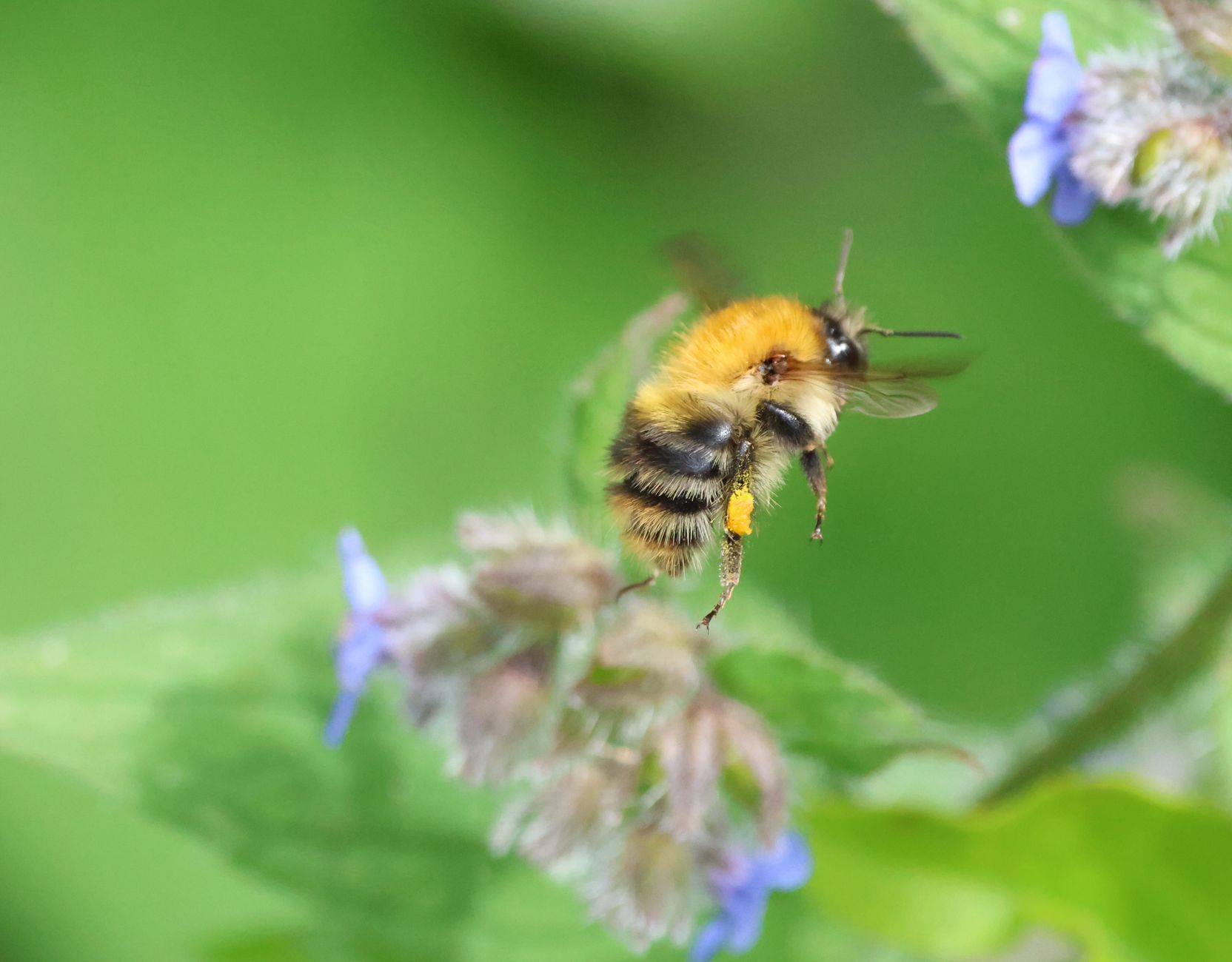
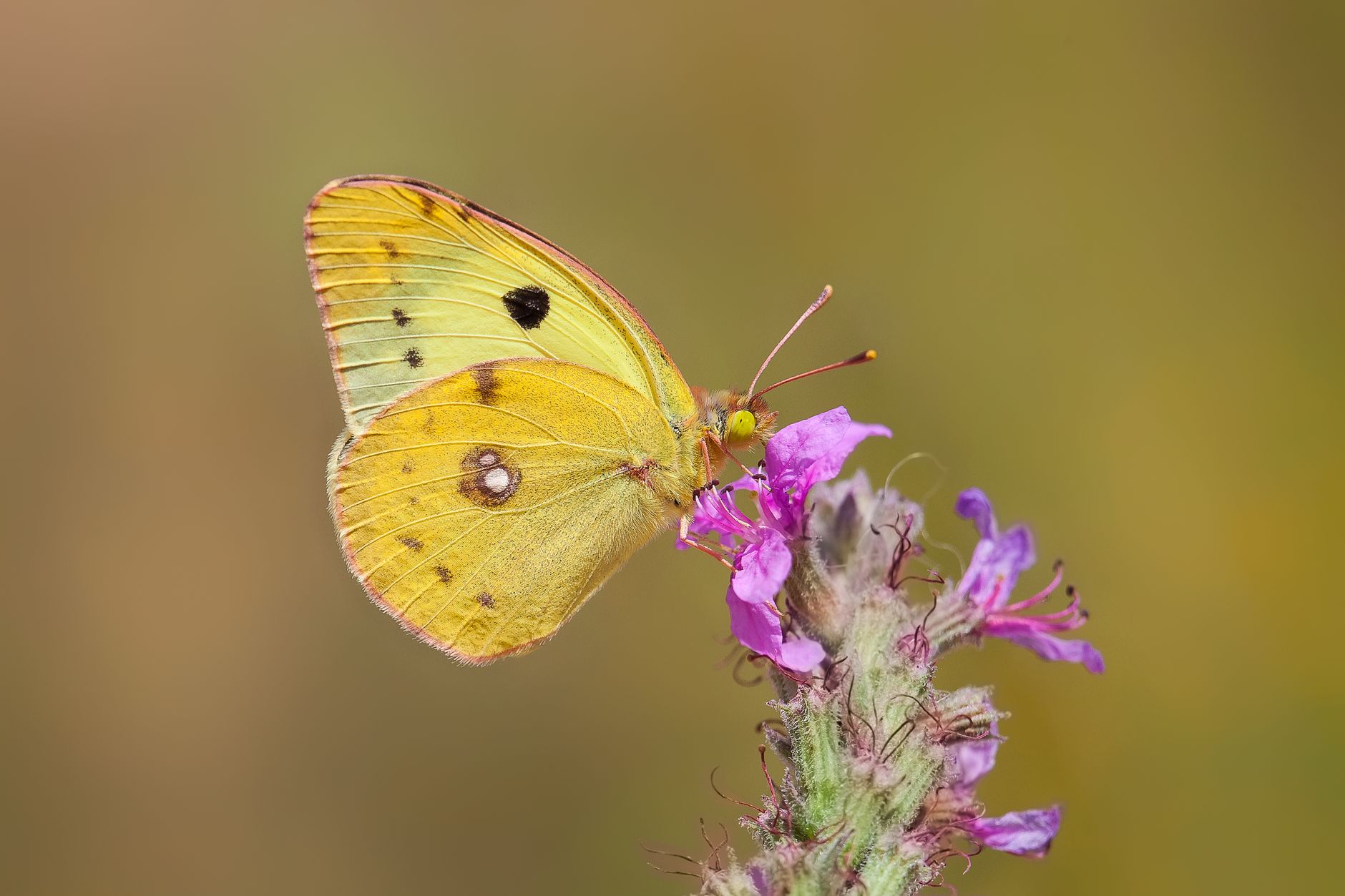
The numbers that emerged from southwest England last July tell a story that is, on the surface, cause for measured optimism. More than 77,000 butterflies were recorded across Devon, with around 47,000 further sightings logged in neighbouring Cornwall during the same month — a combined tally that suggests the region's meadows and coastal grasslands were, at least briefly, teeming with life. Yet what makes these figures genuinely instructive is not their scale alone, but what they reveal about the precarious relationship between insect populations and the atmospheric conditions that govern them.
Rarely does a single month's data capture public attention in the way these counts have, and the reason is not difficult to identify. The sheer density of sightings — concentrated within one summer month across two counties — points to a convergence of favourable conditions: warm temperatures, reduced rainfall, and the kind of prolonged sunshine that allows adult butterflies to feed, mate, and disperse with relative efficiency. Butterfly populations are acutely sensitive to such variables, responding to short-term weather fluctuations in ways that longer-lived species simply do not. A cold, wet July can suppress emergence entirely; a warm one can produce the kind of abundance recorded here.
What this sensitivity exposes, however, is a structural vulnerability that the July figures do little to resolve. Not only do weather conditions shape the immediate abundance of butterflies within a given season, but they also exert cumulative pressure across multiple life stages — from egg and larva through to the overwintering adult or pupa. A single favourable month, however welcome, cannot compensate for a succession of damaging seasons. Researchers studying long-term population trends have consistently noted that year-on-year variability, driven increasingly by erratic weather patterns, poses one of the most consequential threats to butterfly diversity in temperate regions.
Having established that July's counts reflect a momentary alignment of conditions rather than a settled recovery, it becomes necessary to consider what sustained improvement would actually require. Habitat continuity — the preservation of connected corridors of wildflower-rich grassland — appears to be at least as determinative as any single season's weather. Without it, even a population that flourishes in a warm summer may lack the dispersal routes needed to consolidate its gains. The Devon and Cornwall figures, then, are best understood not as evidence of resilience, but as a demonstration of what becomes possible when conditions briefly align — and a reminder of how quickly those conditions can shift.
Highlighted sentences show the grammar focus structure.
Key Vocabulary
precarious
/prɪˈkɛriəs/
Dependent on uncertain or unstable conditions, and therefore likely to fail or become dangerous at any moment.
The company's financial position remained precarious after two consecutive years of falling revenues.
erratic
/ɪˈrætɪk/
Unpredictable and inconsistent in behaviour or pattern, making it difficult to plan or rely upon.
Her erratic attendance at team meetings made it hard for colleagues to depend on her contributions.
cumulative
/ˈkjuːmjələtɪv/
Increasing in effect, strength, or significance as successive elements are added over time.
The cumulative impact of years of poor diet and little exercise eventually took a serious toll on his health.
consequential
/ˌkɒnsɪˈkwɛnʃəl/
Having significant and far-reaching effects or implications, especially in a formal or serious context.
The judge described the ruling as one of the most consequential decisions in the court's recent history.
variability
/ˌvɛəriəˈbɪlɪti/
The quality or degree to which something is subject to change or inconsistency across different instances or periods.
High variability in test scores across schools pointed to deep inequalities in the education system.
determinative
/dɪˈtɜːmɪnətɪv/
Serving as the decisive or most influential factor in shaping an outcome or result.
Access to early legal advice proved determinative in whether defendants received fair sentences.
consolidate
/kənˈsɒlɪdeɪt/
To strengthen or make more secure something that has already been achieved, by building on it or bringing elements together.
After winning three new clients, the firm worked hard to consolidate its position in the regional market.
suppress
/səˈprɛs/
To prevent something from developing, being expressed, or becoming active, often through the application of force or adverse conditions.
Heavy regulation can suppress innovation if it is not carefully balanced with incentives for growth.
| Image | Word | IPA | Definition | Example |
|---|---|---|---|---|
precarious | /prɪˈkɛriəs/ | Dependent on uncertain or unstable conditions, and therefore likely to fail or become dangerous at any moment. | The company's financial position remained precarious after two consecutive years of falling revenues. | |
erratic | /ɪˈrætɪk/ | Unpredictable and inconsistent in behaviour or pattern, making it difficult to plan or rely upon. | Her erratic attendance at team meetings made it hard for colleagues to depend on her contributions. | |
cumulative | /ˈkjuːmjələtɪv/ | Increasing in effect, strength, or significance as successive elements are added over time. | The cumulative impact of years of poor diet and little exercise eventually took a serious toll on his health. | |
consequential | /ˌkɒnsɪˈkwɛnʃəl/ | Having significant and far-reaching effects or implications, especially in a formal or serious context. | The judge described the ruling as one of the most consequential decisions in the court's recent history. | |
variability | /ˌvɛəriəˈbɪlɪti/ | The quality or degree to which something is subject to change or inconsistency across different instances or periods. | High variability in test scores across schools pointed to deep inequalities in the education system. | |
determinative | /dɪˈtɜːmɪnətɪv/ | Serving as the decisive or most influential factor in shaping an outcome or result. | Access to early legal advice proved determinative in whether defendants received fair sentences. | |
consolidate | /kənˈsɒlɪdeɪt/ | To strengthen or make more secure something that has already been achieved, by building on it or bringing elements together. | After winning three new clients, the firm worked hard to consolidate its position in the regional market. | |
suppress | /səˈprɛs/ | To prevent something from developing, being expressed, or becoming active, often through the application of force or adverse conditions. | Heavy regulation can suppress innovation if it is not carefully balanced with incentives for growth. |
Grammar Spotlight
Inversion After Negative and Restrictive Adverbials
Negative/restrictive adverbial + auxiliary + subject + main verb
When do we use it?
- Use inversion to add rhetorical emphasis or formal weight to a statement — it signals that the adverbial idea is especially significant or surprising, a register choice common in academic writing, journalism, and formal speech.
- Deploy it after negative adverbials (Never, Not once, Rarely, Seldom, Under no circumstances) and restrictive ones (Only after, Only when, Not until, Hardly, No sooner) to foreground the limiting condition before revealing the main point.
- Choose inversion deliberately to vary sentence rhythm and signal C1+ command of English — it is marked and formal, so it carries more impact than a neutral word order and is rarely used in casual conversation.
How is it formed?
Negative / restrictive adverbial (e.g. Never, Not only, Rarely, Seldom, Only when)+Auxiliary verb (do/does/did, have/has, modal)+Subject + main verb
The auxiliary moves before the subject — the same inversion pattern as in questions
★Flip the verb: adverbial first, aux before subject
See it in action
Rarely have conservationists recorded such high butterfly counts across two neighbouring counties in a single month.
Not only did the Devon survey log over 77,000 sightings, but it also prompted a wider review of pollinator habitats.
Only when the July data had been fully analysed did researchers begin to speak of measured optimism.
Under no circumstances should conservationists interpret a single season's figures as proof of long-term recovery.
Remember this
Pattern: [Negative/Restrictive Adverbial] + [Auxiliary] + [Subject] + [Main Verb / Rest of Clause]
Correct
- ✓Never have scientists observed such a rapid rebound in butterfly populations.
- ✓Not until the Cornwall data arrived did the full picture become clear.
- ✓Seldom does a single month's survey generate this level of public interest.
Avoid
- ✗Never scientists have observed such a rapid rebound. ✗ (auxiliary must precede subject)
- ✗Not until the Cornwall data arrived the full picture became clear. ✗ (inversion omitted after restrictive adverbial)
- ✗Seldom a single month's survey generates this level of interest. ✗ (no auxiliary inserted before subject)
Discussion Questions
- 1.
In your country, have you noticed any changes in wildlife or nature over the course of your lifetime — perhaps certain animals becoming rarer, or seasonal patterns shifting? What do you think has driven those changes, and how concerned are people around you about them?
- 2.
The article suggests that short-term positive data can be misleading if it masks deeper structural problems. Can you think of an example from your own country — in any field, such as the economy, public health, or education — where encouraging statistics were later revealed to be a temporary alignment of conditions rather than genuine progress?
- 3.
To what extent do you think governments have a responsibility to preserve natural habitats, even when doing so conflicts with economic development or housing needs? How is this tension typically handled in your country, and do you think the balance struck is the right one?
- 4.
When you were growing up, how connected were you to the natural environment — did you spend time outdoors in fields, forests, or coastal areas? Do you think younger generations today have a similar relationship with nature, or has something been lost, and does it matter?
Comprehension Questions
- 1.
Why does the author argue that the July butterfly counts are 'genuinely instructive' beyond their sheer scale?
- 2.
What combination of atmospheric conditions does the article identify as responsible for the high density of butterfly sightings in July?
- 3.
How does the concept of cumulative pressure across life stages undermine the significance of a single favourable month?
- 4.
Is habitat continuity presented as more or less important than seasonal weather in determining long-term butterfly population health?
- 5.
Could the Devon and Cornwall figures reasonably be interpreted as evidence of a settled recovery in butterfly populations, according to the author?
View answers for the comprehension questions
- 1.The author argues that the figures are instructive not simply because of their size, but because of what they reveal about the fragile relationship between insect populations and the atmospheric conditions that govern them. The counts illuminate how acutely sensitive butterfly populations are to short-term weather variables such as temperature, rainfall, and sunshine.
- 2.The article points to a convergence of warm temperatures, reduced rainfall, and prolonged sunshine as the key conditions that enabled adult butterflies to feed, mate, and disperse with relative efficiency. Together, these factors created a brief but highly favourable environment for butterfly activity.
- 3.Even when one month produces ideal conditions, butterflies must survive through multiple life stages — egg, larva, pupa, and overwintering adult — each of which is vulnerable to damaging weather. A single good month cannot compensate for a succession of harmful seasons, meaning the overall population trajectory may remain precarious despite a temporary abundance.
- 4.The article presents habitat continuity as at least equally determinative as seasonal weather, if not more so. Without connected corridors of wildflower-rich grassland, a population that thrives in a warm summer may still lack the dispersal routes needed to consolidate its gains, making structural habitat preservation essential to any sustained recovery.
- 5.No — the author explicitly cautions against this interpretation. The figures are described as a demonstration of what becomes possible when conditions briefly align, rather than proof of resilience or lasting improvement, and the author reminds readers how quickly those favourable conditions can shift.
Test your knowledge
Question 1Fill-in-the-blank
The new regulations were designed to ____ any further spread of misinformation before it could influence the outcome of the vote.
Question 2Fill-in-the-blank
After months of negotiation, the two departments finally agreed to ____ their separate budgets into a single, more manageable fund.
Question 3Fill-in-the-blank
The machine's ____ performance made it difficult for the technicians to diagnose the fault, since the problem appeared and disappeared without any clear pattern.
Question 4Fill-in-the-blank
Her position at the organisation felt increasingly ____, as the funding that supported her role had not been renewed and no decision had yet been made about its future.
Question 5Fill-in-the-blank
The ____ effect of small daily savings over several years meant that, by the time the course fees were due, the full amount had already been set aside.
View answers for test your knowledge
- 1.suppress
- 2.consolidate
- 3.erratic
- 4.precarious
- 5.cumulative
Practice this topic live
Use what you’ve learned in a real 1:1 English conversation with an experienced Talk4Impact tutor.
Practice with tutor