
Conservation project for rare bumblebees in the UK
Level
b2
Topic
environment
Read this at a different level:c1
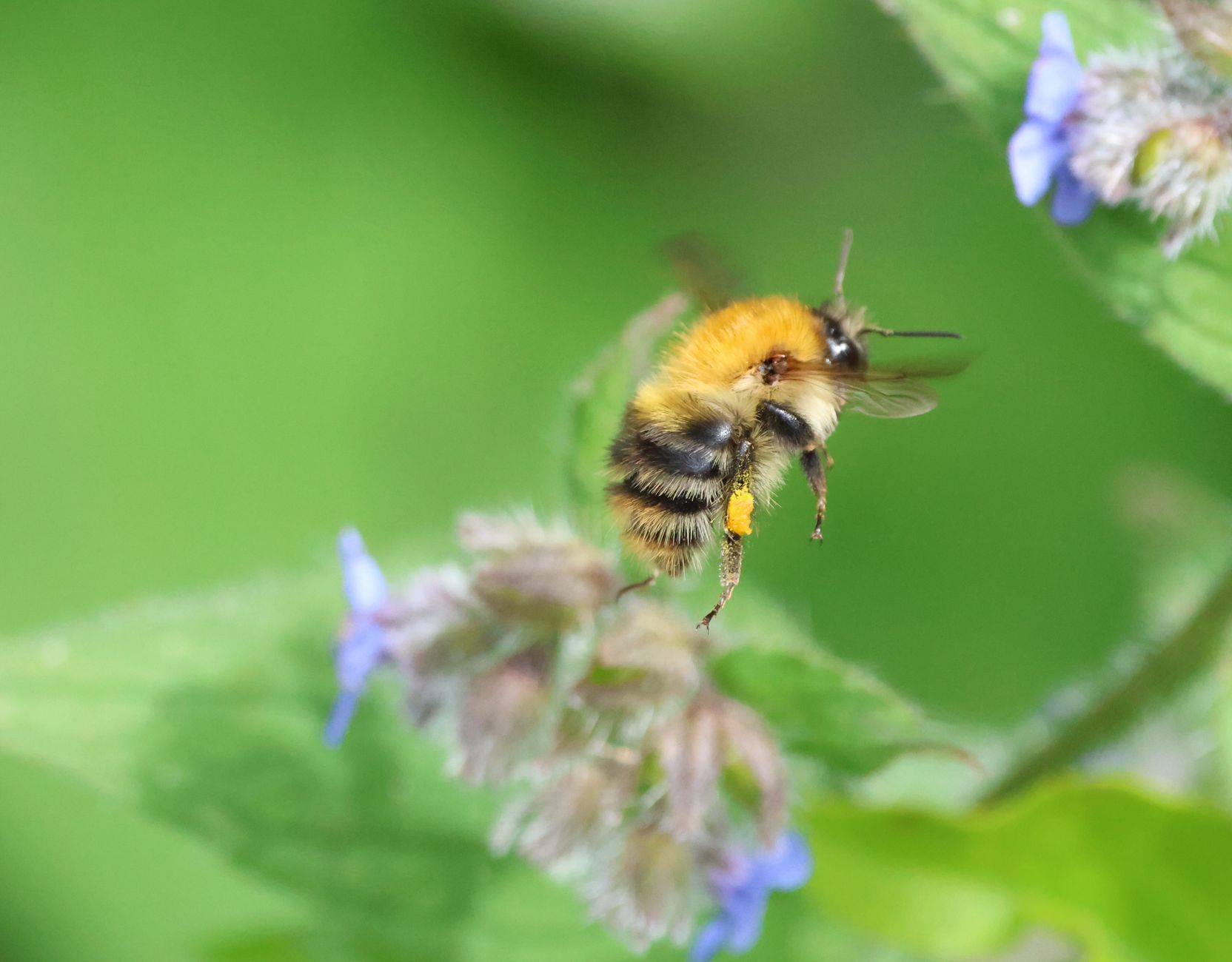
The Moss carder bumblebee has been struggling to survive in the UK for decades. Conservationists have been working hard to reverse its decline, but the species remains rare and vulnerable across much of the country. A new programme, which has recently been launched to address this crisis, aims to give the bee a genuine chance of recovery.
The project focuses on three specific regions: Cornwall, Kent, and the North Pennines. These areas have been selected because they still support small populations of the Moss carder bumblebee. Conservationists have been monitoring these populations for some time, and they believe that targeted action in these regions could make a real difference. The approach involves improving the habitats where the species is known to live, ensuring that the bees have access to the wildflowers they depend on for food.
The Moss carder bumblebee is considered particularly vulnerable because it has very specific habitat requirements. It tends to favour rough grassland with a wide variety of flowering plants. Much of this kind of landscape has been lost over the years, which is why the species has become so rare. Experts argue that without sustained intervention, the situation could have worsened significantly.
Conservation projects of this kind are not straightforward. They require cooperation between landowners, local communities, and environmental organisations. Nevertheless, the programme represents a meaningful step forward. How long conservationists have been trying to protect this species reflects just how serious the challenge is — and how much patience the work demands. The fact that three distinct regions are now involved suggests that the effort has been growing in scale and ambition. For a species that has been quietly disappearing from the British countryside, this kind of coordinated attention may prove to be essential.
Highlighted sentences show the grammar focus structure.
Key Vocabulary
vulnerable
/ˈvʌlnərəbəl/
easily harmed or put at risk, especially because of a lack of protection or strength.
Young children are particularly vulnerable to infections during the winter months.
decline
/dɪˈklaɪn/
a gradual decrease in the number, quality, or strength of something over time.
The decline in newspaper readership has forced many publishers to move online.
targeted
/ˈtɑːrɡɪtɪd/
directed specifically at a particular group, area, or problem in order to be more effective.
The government launched a targeted campaign to reduce smoking among teenagers.
habitat
/ˈhæbɪtæt/
the natural environment in which a particular animal or plant normally lives and grows.
Cutting down forests destroys the habitat of many species that depend on trees for shelter.
intervention
/ˌɪntərˈvɛnʃən/
an action taken to improve or change a situation that would otherwise continue in a harmful direction.
Early medical intervention can significantly improve a patient's chances of recovery.
cooperation
/koʊˌɒpəˈreɪʃən/
the process of working together with others towards a shared goal or outcome.
The project was completed ahead of schedule thanks to the cooperation of all team members.
coordinated
/koʊˈɔːrdɪneɪtɪd/
organized so that different people or parts work together effectively as part of a single plan.
A coordinated response from emergency services helped bring the flood situation under control.
| Image | Word | IPA | Definition | Example |
|---|---|---|---|---|
vulnerable | /ˈvʌlnərəbəl/ | easily harmed or put at risk, especially because of a lack of protection or strength. | Young children are particularly vulnerable to infections during the winter months. | |
decline | /dɪˈklaɪn/ | a gradual decrease in the number, quality, or strength of something over time. | The decline in newspaper readership has forced many publishers to move online. | |
targeted | /ˈtɑːrɡɪtɪd/ | directed specifically at a particular group, area, or problem in order to be more effective. | The government launched a targeted campaign to reduce smoking among teenagers. | |
habitat | /ˈhæbɪtæt/ | the natural environment in which a particular animal or plant normally lives and grows. | Cutting down forests destroys the habitat of many species that depend on trees for shelter. | |
intervention | /ˌɪntərˈvɛnʃən/ | an action taken to improve or change a situation that would otherwise continue in a harmful direction. | Early medical intervention can significantly improve a patient's chances of recovery. | |
cooperation | /koʊˌɒpəˈreɪʃən/ | the process of working together with others towards a shared goal or outcome. | The project was completed ahead of schedule thanks to the cooperation of all team members. | |
coordinated | /koʊˈɔːrdɪneɪtɪd/ | organized so that different people or parts work together effectively as part of a single plan. | A coordinated response from emergency services helped bring the flood situation under control. |
Grammar Spotlight
Present Perfect Continuous (with for / since / how long)
have / has + been + verb-ing
When do we use it?
- Use it to show that an action started in the past and is still continuing now, especially when you want to emphasise the duration or ongoing effort involved.
- Pair it with 'for' (a length of time, e.g. for decades) or 'since' (a starting point, e.g. since 2010) to anchor the action in time.
- Use 'How long have/has … been …ing?' to ask about the duration of an activity that is still in progress.
How is it formed?
have / has + been+verb-ing+(+ for / since / how long)
Use 'has' with he / she / it; 'have' with all other subjects
★Action started in the past — still happening now!
See it in action
The Moss carder bumblebee has been struggling to survive in the UK for decades.
Conservationists have been working hard to protect rare species since the 1990s.
How long has the new conservation programme been running?
Scientists have been monitoring bumblebee populations for several years.
Remember this
'For' is followed by a duration (for decades, for six months); 'since' is followed by a specific point in time (since 2010, since the programme began). Both are strong signals that the Present Perfect Continuous is likely the right choice.
forsincehow longall dayall weekrecentlylatelyover the past few yearsso farstill
Discussion Questions
- 1.
In your country, are there any animals or plants that are considered endangered or at risk of disappearing? What factors do you think have contributed to their decline?
- 2.
To what extent do you think ordinary people — not just scientists or governments — have a responsibility to take action when a species is vulnerable? What could individuals realistically do?
- 3.
How much importance do people in your community place on protecting the natural environment? In what ways, if any, does this show up in everyday life or local decisions?
- 4.
How might the need for cooperation between landowners, local communities, and organisations make conservation projects more difficult to manage? Have you ever been part of a situation where different groups had to work together towards a shared goal — how did it go?
Comprehension Questions
- 1.
Why have conservationists chosen Cornwall, Kent, and the North Pennines as the focus regions for this programme?
- 2.
What does the article suggest about the relationship between changes in the landscape and the bee's rarity?
- 3.
How does the writer use the length of time conservationists have been working to convey the scale of the challenge?
- 4.
What might have happened to the Moss carder bumblebee if no conservation programme had been launched?
- 5.
To what extent does the article present cooperation between different groups as essential to the success of conservation efforts?
View answers for the comprehension questions
- 1.These three regions have been selected because they still support small existing populations of the Moss carder bumblebee, making them the most viable locations for targeted conservation action to have a meaningful effect.
- 2.The article implies a direct causal link: the loss of rough grassland with diverse flowering plants has removed the specific habitat the Moss carder bumblebee depends on, which is the primary reason the species has become so rare across the UK.
- 3.The writer notes that conservationists have been trying to protect the species for a long time, using this duration not as a sign of failure but as evidence of how serious and demanding the challenge is, implying that patience and sustained effort are essential qualities in this kind of work.
- 4.According to the article, experts argue that without sustained intervention the situation could have worsened significantly, suggesting the species might have continued its decline toward local or even national extinction without coordinated action.
- 5.The article presents cooperation as a fundamental requirement rather than an optional advantage, explicitly stating that projects of this kind demand collaboration between landowners, local communities, and environmental organisations, and describing the multi-region programme as a sign that the effort has grown in both scale and ambition.
Test your knowledge
Question 1Fill-in-the-blank
The rescue teams worked in a ____ way, with each group assigned a specific area so that no part of the building was left unchecked.
Question 2Fill-in-the-blank
The documentary explained that the red fox can adapt to many environments, but it thrives best in its natural ____ of woodland and open countryside.
Question 3Fill-in-the-blank
The teacher decided that some ____ was necessary when two students in the class kept disrupting the lesson for everyone else.
Question 4Fill-in-the-blank
The project was completed ahead of schedule thanks to the ____ of everyone on the team, who shared tasks and communicated openly throughout.
Question 5Fill-in-the-blank
Young children are particularly ____ to illness during the winter months, so it is important to keep them warm and well-rested.
View answers for test your knowledge
- 1.coordinated
- 2.habitat
- 3.intervention
- 4.cooperation
- 5.vulnerable
Practice this topic live
Use what you’ve learned in a real 1:1 English conversation with an experienced Talk4Impact tutor.
Practice with tutor