
Autumn fungi spotting for families
Level
c1
Topic
environment
Read this at a different level:a1b2
There is a widespread assumption that autumn's ecological richness belongs primarily to the botanist or the professional naturalist — that meaningful engagement with the living world requires specialist training and expensive equipment. What the growing movement around fungi spotting calls into question is precisely this assumption. Experts encouraging families to head outdoors during the autumn months are not merely promoting a recreational activity; they are making a case for a different kind of environmental literacy, one rooted in proximity rather than expertise.
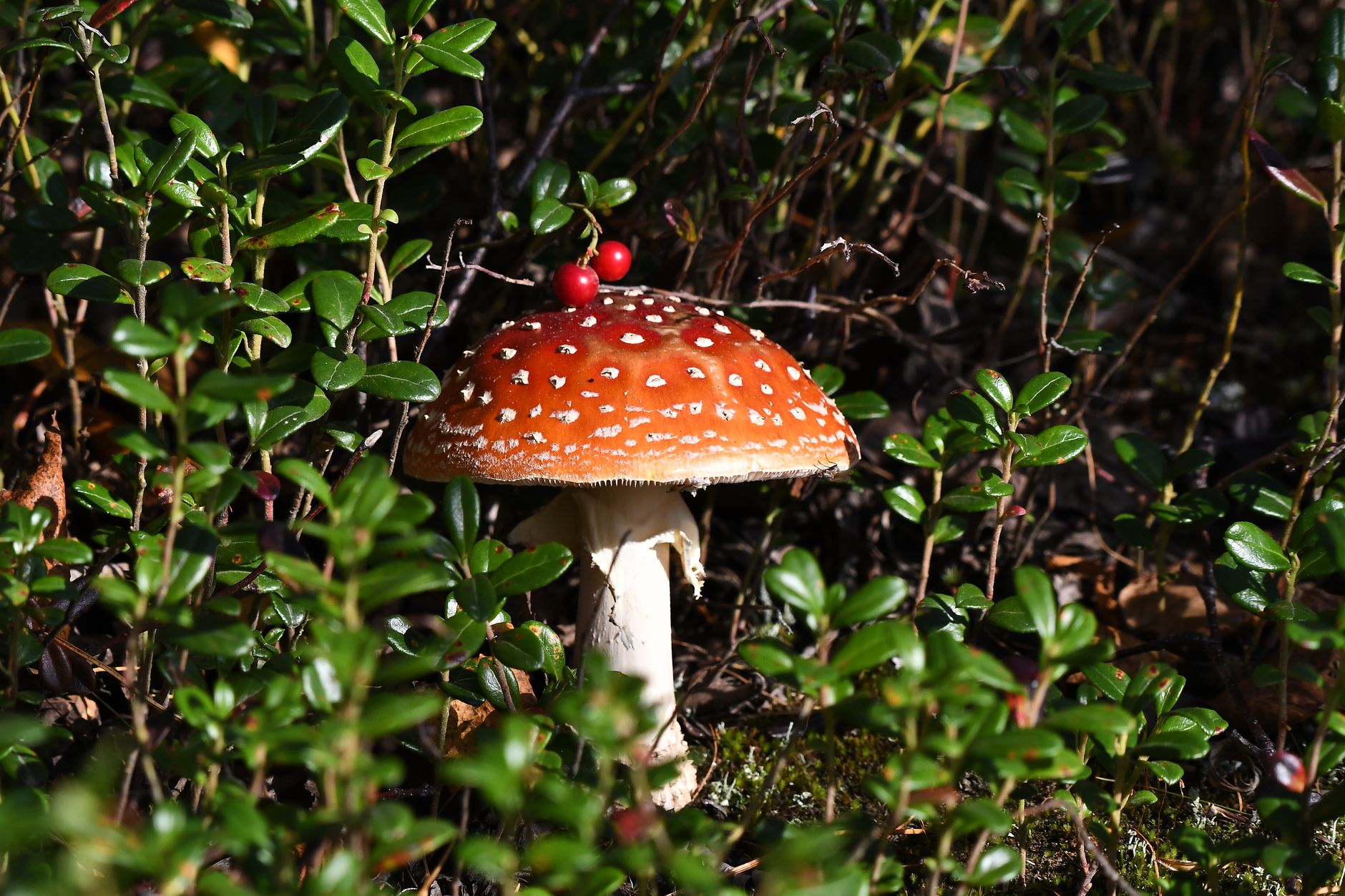
Autumn is the pivotal season for fungal activity. The combination of cooling temperatures and residual moisture creates conditions in which fruiting bodies — the visible structures produced by underground fungal networks — emerge in striking proliferation. Woodlands, hedgerows, and even the grass verges bordering suburban paths can yield an astonishing diversity of forms: bracket fungi clinging to decaying bark, delicate caps scattered across leaf litter, vivid crusts spreading along fallen timber. It is precisely this accessibility — the fact that fungi spotted during an ordinary neighbourhood walk can rival anything found deep in managed woodland — that makes the activity so compelling for families with limited time or resources.
The approach advocated by experts is deliberately low-threshold. Rather than demanding identification skills that take years to develop, those involved in the campaign urge participants simply to observe and photograph whatever they encounter. A photograph taken carefully, capturing the cap, the underside, and the immediate surroundings, can later be cross-referenced against field guides or shared with online communities dedicated to amateur mycology. What this does, in effect, is redistribute the interpretive labour: the initial encounter requires only curiosity, while deeper understanding can accumulate gradually over multiple seasons.
There is, however, a tension worth naming. The very accessibility that makes fungi spotting attractive to newcomers can obscure the ecological complexity underlying what appears to be a simple walk in the woods. Fungal networks — sometimes extending across hectares beneath the soil — play a foundational role in nutrient cycling and in sustaining the root systems of trees. A family photographing a mushroom on a Sunday morning is, whether knowingly or not, documenting the surface expression of processes operating on a timescale and scale that dwarf human perception. Recognising this gap between what is visible and what is actually occurring may be the most valuable outcome of the exercise: not identification, but a recalibration of one's sense of what the familiar landscape contains.
Having engaged seriously with fungi spotting even for a single season, many participants report a lasting shift in how they read outdoor environments. The autumn walk, it turns out, was never as ordinary as it seemed.
Highlighted sentences show the grammar focus structure.
Key Vocabulary
proliferation
/prəˌlɪfəˈreɪʃən/
A rapid and often uncontrolled increase in the number or spread of something.
The proliferation of social media platforms over the past decade has fundamentally altered how news is consumed.
advocate
/ˈædvəkeɪt/
To publicly and actively support or recommend a particular cause, policy, or course of action.
Several leading economists advocate for a universal basic income as a response to automation-driven job losses.
foundational
/faʊnˈdeɪʃənəl/
Relating to or serving as an essential base or underlying principle upon which something else depends or is built.
Trust between colleagues is foundational to any productive working relationship in a high-pressure environment.
recalibration
/ˌriːˌkælɪˈbreɪʃən/
The process of adjusting or reassessing a system, attitude, or set of expectations in response to new information or changed circumstances.
The economic crisis forced a recalibration of the government's spending priorities and long-term fiscal targets.
call into question
/kɔːl ˈɪntə ˈkwɛstʃən/
To cause doubt about the validity, truth, or reliability of something previously accepted or assumed.
The newly discovered documents call into question the official account of events surrounding the treaty's signing.
obscure
/əbˈskjʊər/
To make something difficult to perceive, understand, or discover, often by concealing or complicating it.
Dense legal terminology can obscure the practical implications of a contract for those without specialist training.
proximity
/prɒkˈsɪmɪti/
The state of being near to something or someone in space, time, or relationship, often implying meaningful closeness.
The proximity of the school to a major industrial site raised serious concerns among parents about air quality.
dwarf
/dwɔːrf/
To cause something to appear insignificantly small or unimportant by comparison with something much larger or greater.
The scale of the humanitarian crisis dwarfs anything the relief agency had previously been asked to manage.
| Image | Word | IPA | Definition | Example |
|---|---|---|---|---|
proliferation | /prəˌlɪfəˈreɪʃən/ | A rapid and often uncontrolled increase in the number or spread of something. | The proliferation of social media platforms over the past decade has fundamentally altered how news is consumed. | |
advocate | /ˈædvəkeɪt/ | To publicly and actively support or recommend a particular cause, policy, or course of action. | Several leading economists advocate for a universal basic income as a response to automation-driven job losses. | |
foundational | /faʊnˈdeɪʃənəl/ | Relating to or serving as an essential base or underlying principle upon which something else depends or is built. | Trust between colleagues is foundational to any productive working relationship in a high-pressure environment. | |
recalibration | /ˌriːˌkælɪˈbreɪʃən/ | The process of adjusting or reassessing a system, attitude, or set of expectations in response to new information or changed circumstances. | The economic crisis forced a recalibration of the government's spending priorities and long-term fiscal targets. | |
call into question | /kɔːl ˈɪntə ˈkwɛstʃən/ | To cause doubt about the validity, truth, or reliability of something previously accepted or assumed. | The newly discovered documents call into question the official account of events surrounding the treaty's signing. | |
obscure | /əbˈskjʊər/ | To make something difficult to perceive, understand, or discover, often by concealing or complicating it. | Dense legal terminology can obscure the practical implications of a contract for those without specialist training. | |
proximity | /prɒkˈsɪmɪti/ | The state of being near to something or someone in space, time, or relationship, often implying meaningful closeness. | The proximity of the school to a major industrial site raised serious concerns among parents about air quality. | |
dwarf | /dwɔːrf/ | To cause something to appear insignificantly small or unimportant by comparison with something much larger or greater. | The scale of the humanitarian crisis dwarfs anything the relief agency had previously been asked to manage. |
Grammar Spotlight
Reduced Relative Clauses
noun + [present/past participle phrase]
When do we use it?
- Use reduced relative clauses to compress information elegantly — replacing 'who/which + be + participle' with just the participle — a hallmark of formal written English at C1 level.
- Choose the -ing form when the noun performs the action (active), and the past participle when the noun receives it (passive), to preserve precise meaning without a full clause.
- Favour this structure to avoid repetitive relative clauses in academic, journalistic, or professional writing, where concision and register are valued.
How is it formed?
noun phrase+present participle (-ing) OR past participle (-ed/irregular)+optional: complement or adverbial
Active meaning → -ing; passive meaning → past participle. The relative pronoun and auxiliary are dropped.
★Drop 'who/which + be', keep the participle.
See it in action
Naturalists exploring woodland margins in autumn often encounter dozens of fungal species in a single afternoon.
The assumption held by many city dwellers is that meaningful engagement with nature requires specialist training.
Fungi spotted along the forest floor can reveal more about an ecosystem than any textbook.
The movement growing around amateur naturalism challenges the idea that science belongs only to professionals.
Remember this
✗The fungi which are growing on dead wood are edible.
✓The fungi growing on dead wood are edible.
At C1, retaining 'which are' before an -ing participle is grammatically acceptable but stylistically weak. Drop the relative pronoun and auxiliary to reduce the clause.
✗The report written by the naturalist it contains rare observations.
✓The report written by the naturalist contains rare observations.
After a reduced relative clause, do not repeat the subject pronoun ('it'). The noun phrase plus participle phrase together form the subject — no pronoun is needed.
✗Anyone not having a permit should register at the entrance.
✓Anyone without a permit should register at the entrance.
Negating a reduced relative clause with 'not having' is grammatically possible but often unnatural. Prefer a prepositional phrase ('without') or retain the full clause ('who does not have') for clarity.
Discussion Questions
- 1.
The article argues that meaningful engagement with nature requires proximity rather than expertise. Do you agree with this view? In your own country or community, do people tend to think that understanding the natural world is something reserved for scientists and specialists, or is it seen as something ordinary people can participate in?
- 2.
The campaign described in the article uses photography and online communities to help amateur participants build knowledge gradually over time. To what extent do you think digital technology has changed the way people in your country learn about or connect with the natural environment? Has this been a positive development, in your view?
- 3.
The article raises the idea that what appears simple on the surface — a walk in the woods — can conceal enormous complexity beneath it. Can you think of an area of knowledge or everyday experience in your own life where you discovered, perhaps unexpectedly, that something familiar was far more complex than you had assumed? What prompted that realisation?
- 4.
The author implies that environmental literacy — the ability to understand and interpret the living world around us — should be cultivated from an early age. How is this kind of learning approached in the education system you grew up in? Do you think schools in your country give sufficient attention to direct, outdoor engagement with nature, or is it largely neglected in favour of classroom-based learning?
Comprehension Questions
- 1.
Why do the experts behind the fungi spotting campaign encourage participants to photograph rather than identify what they find?
- 2.
What conditions make autumn the most productive season for encountering fungi, and where specifically might a family find them?
- 3.
How does the article suggest that fungi spotting challenges a common assumption about engaging with the natural world?
- 4.
Is the article entirely positive about the accessibility of fungi spotting, or does it identify a potential drawback?
- 5.
Considering both the opening and closing paragraphs, what broader shift in perception does the author suggest fungi spotting can produce in participants?
View answers for the comprehension questions
- 1.The experts deliberately keep the threshold low by asking participants only to observe and photograph fungi, because identification skills take years to develop. By photographing the cap, underside, and surroundings, participants can later consult field guides or online communities, meaning the initial encounter requires only curiosity while deeper understanding builds gradually over time.
- 2.The combination of cooling temperatures and residual moisture creates ideal conditions for fruiting bodies to emerge in large numbers. Families can find fungi in a wide range of locations, from woodlands and hedgerows to the grass verges along ordinary suburban paths, making specialist travel unnecessary.
- 3.The article challenges the widespread assumption that meaningful engagement with nature requires specialist training and expensive equipment. By showing that an ordinary neighbourhood walk can yield remarkable fungal diversity, the campaign argues for an environmental literacy based on proximity and curiosity rather than professional expertise.
- 4.The article is not entirely positive; it identifies a significant tension in that accessibility can obscure the genuine ecological complexity beneath what seems like a simple walk. Fungal networks extend across hectares underground and play a foundational role in nutrient cycling, and the author suggests that the gap between what is visible and what is actually occurring is something participants risk overlooking.
- 5.The author suggests that even a single season of serious engagement with fungi spotting can produce a lasting change in how people read outdoor environments, moving them away from the assumption that an autumn walk is ordinary or ecologically unremarkable. This recalibration — recognising that the familiar landscape contains far more than is immediately visible — is presented as the most valuable outcome of the activity, more significant than any specific identification skill gained.
Test your knowledge
Question 1Fill-in-the-blank
Several prominent researchers have publicly ____ for stricter data privacy regulations, arguing that current laws fail to protect individuals from corporate misuse of personal information.
Question 2Fill-in-the-blank
The new study does not disprove the earlier findings outright, but it does ____ ____ ____ the reliability of the methodology used to collect the original data.
Question 3Fill-in-the-blank
The sheer scale of the new stadium will ____ every other building in the surrounding district, making the older structures look almost insignificant by comparison.
Question 4Fill-in-the-blank
Trust between colleagues is ____ to any productive working relationship; without it, even the most talented team will struggle to collaborate effectively.
Question 5Fill-in-the-blank
After receiving detailed feedback from users, the development team undertook a thorough ____ of their priorities, shifting focus away from speed and towards accessibility.
View answers for test your knowledge
- 1.advocated
- 2.call into question
- 3.dwarf
- 4.foundational
- 5.recalibration
Practice this topic live
Use what you’ve learned in a real 1:1 English conversation with an experienced Talk4Impact tutor.
Practice with tutor