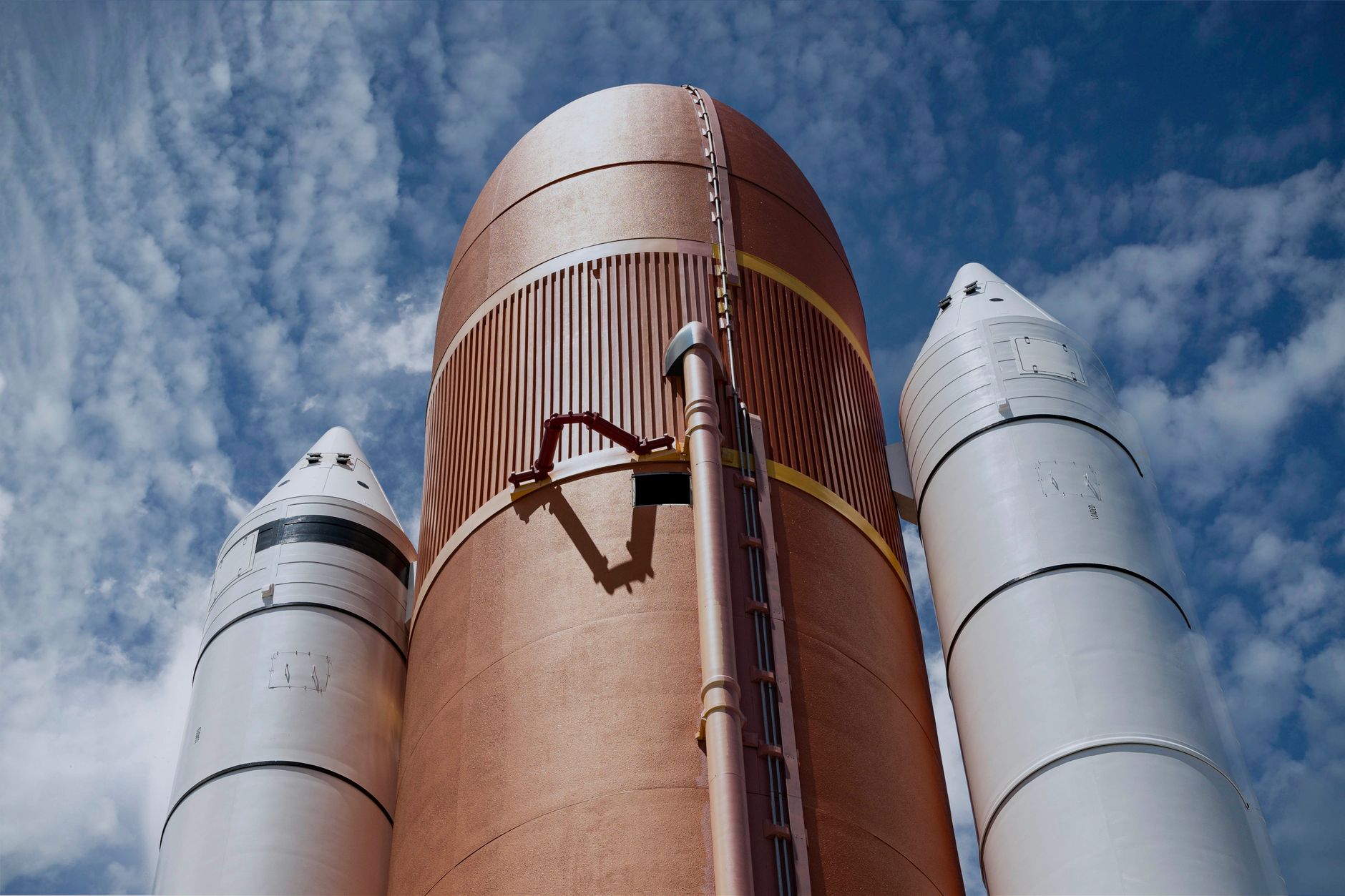
NASA launch of a new space telescope
Level
a2
Topic
science
Read this at a different level:b1b2c1
My friend Kenji loves space. Last week, he called me with exciting news. NASA launched a new space telescope. Kenji was very happy. He talked about it for a long time.
Kenji told me the telescope is very big. It is about the size of a tour bus. I thought that was amazing. He said you should look up more information about it online. The telescope is going to study planets far from our solar system.
Kenji explained the telescope wants to find more than 100,000 planets. That number is very hard to believe. He also said it is going to help us learn more about the universe. Kenji thinks everyone should read about this news. He sent me some photos and videos that night.
I looked at the photos Kenji sent. The telescope looked incredible. Now I want to learn more about space too.
Highlighted sentences show the grammar focus structure.
Key Vocabulary
telescope
/ˈtɛlɪskoʊp/
A long tube-shaped tool that you look through to see things that are very far away, like stars.
We used a telescope to look at the moon from our backyard.
launch
/lɔːntʃ/
To send something, like a rocket or a ship, into the air or water for the first time.
The scientists launched a small rocket from the desert last Saturday.
universe
/ˈjuːnɪvɜːrs/
Everything that exists, including all the stars, planets, and space.
My little brother asked his teacher how big the universe is.
incredible
/ɪnˈkrɛdɪbəl/
Something that is so good or surprising that it is very hard to believe.
The view from the top of the mountain was incredible.
exciting
/ɪkˈsaɪtɪŋ/
Something that makes you feel very happy and full of energy because it is interesting or new.
My sister got an exciting letter about her new job yesterday.
| Image | Word | IPA | Definition | Example |
|---|---|---|---|---|
telescope | /ˈtɛlɪskoʊp/ | A long tube-shaped tool that you look through to see things that are very far away, like stars. | We used a telescope to look at the moon from our backyard. | |
launch | /lɔːntʃ/ | To send something, like a rocket or a ship, into the air or water for the first time. | The scientists launched a small rocket from the desert last Saturday. | |
universe | /ˈjuːnɪvɜːrs/ | Everything that exists, including all the stars, planets, and space. | My little brother asked his teacher how big the universe is. | |
incredible | /ɪnˈkrɛdɪbəl/ | Something that is so good or surprising that it is very hard to believe. | The view from the top of the mountain was incredible. | |
exciting | /ɪkˈsaɪtɪŋ/ | Something that makes you feel very happy and full of energy because it is interesting or new. | My sister got an exciting letter about her new job yesterday. |
Grammar Spotlight
Future with 'going to' — Plans and Predictions
am / is / are + going to + base verb
When do we use it?
- Use it to talk about plans you already decided — something you chose before you speak.
- Use it to predict something when you can see or know the reason right now.
- It works for the near future and the far future — any plan or prediction counts.
How is it formed?
am / is / are+going to+base verb
Use 'am' with I, 'is' with he/she/it, 'are' with you/we/they
★Subject + am/is/are + going to + verb!
See it in action
Kenji is going to watch the new NASA telescope launch on TV tonight.
Scientists say the telescope is going to take amazing photos of space.
I am going to look up at the stars with my friend this weekend.
We are going to learn a lot from the new space telescope.
Remember this
✗Kenji is going to watches the launch.
✓Kenji is going to watch the launch.
After 'going to', always use the base verb — no -s, no -ing, no -ed.
✗She going to visit NASA next year.
✓She is going to visit NASA next year.
Don't forget 'is / am / are' — 'going to' needs a form of 'be' before it.
✗They are going to to learn about space.
✓They are going to learn about space.
Write 'going to' once only — don't add an extra 'to' before the verb.
Discussion Questions
- 1.
Did you learn about space at school in your country? What did you study?
- 2.
Do you like to read or watch exciting news about science? Why or why not?
- 3.
When you were a child, did you look at the stars at night? Where were you, and what did you think about?
Comprehension Questions
- 1.
Why did Kenji call his friend?
- 2.
How big is the new telescope?
- 3.
What did Kenji send that night?
- 4.
How many planets will the telescope study?
View answers for the comprehension questions
- 1.Kenji called his friend because NASA launched a new space telescope. He was very happy and wanted to share the exciting news.
- 2.The telescope is about the size of a tour bus.
- 3.Kenji sent his friend some photos and videos of the telescope that night.
- 4.The telescope is going to find more than 100,000 planets.
Test your knowledge
Question 1Fill-in-the-blank
The acrobat's performance was so ____ that everyone in the audience gasped.
Question 2Fill-in-the-blank
The company will ____ its new product in stores next month.
Question 3Fill-in-the-blank
The children were ____ because they were going to the park for the first time.
Question 4Fill-in-the-blank
She used a ____ to look at the birds sitting high in the trees.
View answers for test your knowledge
- 1.incredible
- 2.launch
- 3.exciting
- 4.telescope
Practice this topic live
Use what you’ve learned in a real 1:1 English conversation with an experienced Talk4Impact tutor.
Practice with tutor