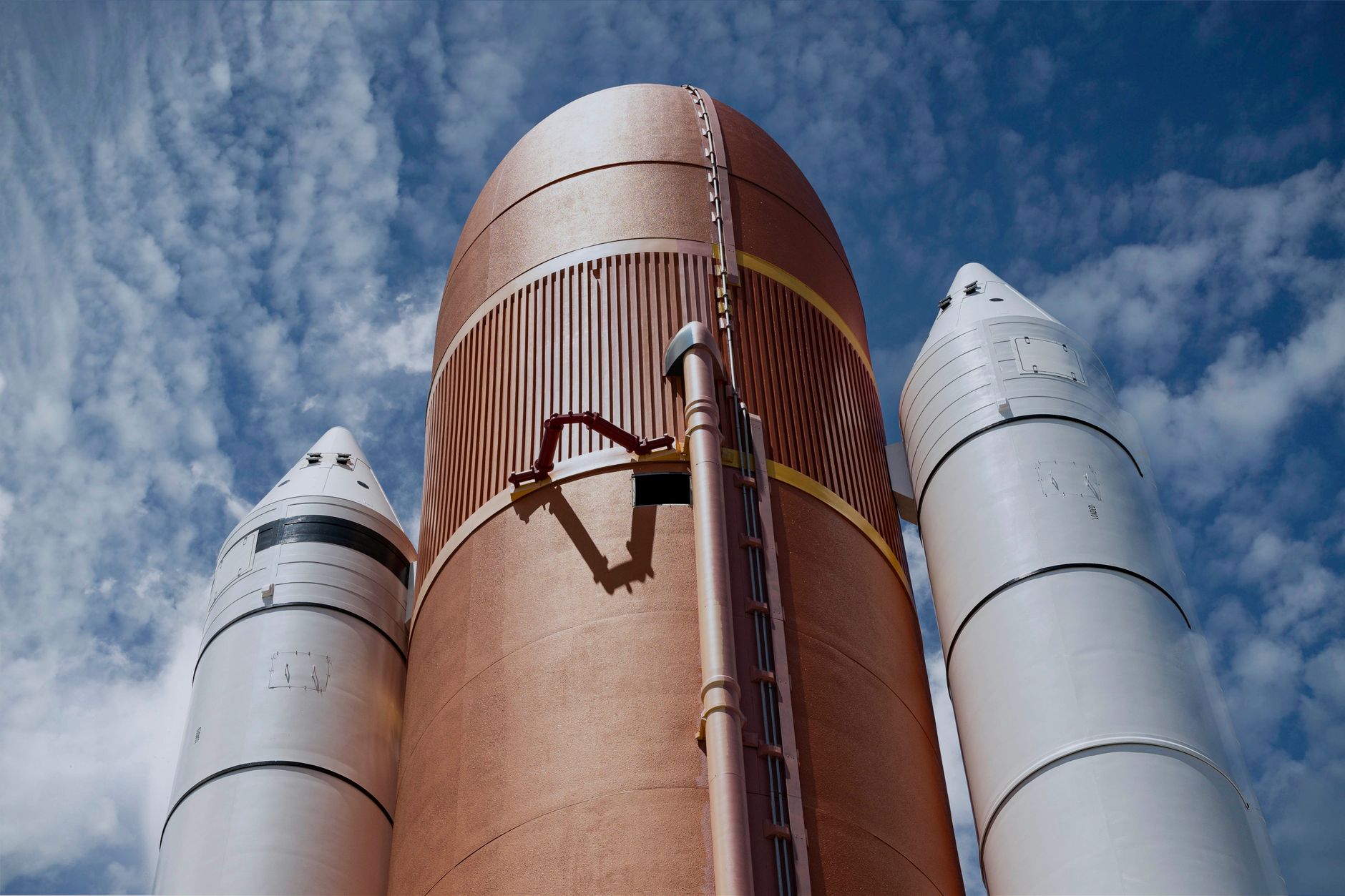
NASA launch of a new space telescope
Level
c1
Topic
science
Read this at a different level:a2b1b2
Most people assume that the search for planets beyond our solar system is a painstaking, decades-long endeavour yielding results in the dozens. What NASA's newly launched space telescope promises to overturn is precisely that assumption — and the scale of its ambition is difficult to overstate without distorting it.
The telescope, approximately the size of a tour bus, has been designed to identify more than 100,000 planets orbiting stars outside our solar system. These worlds, known as exoplanets, have been catalogued only in the thousands by previous instruments. It is the sheer breadth of this new mission that marks a genuine departure from anything attempted before. Having been engineered to survey vast swathes of the sky with sustained precision, the telescope is expected to generate a volume of planetary data that will keep researchers occupied for years, if not decades.
What makes this undertaking particularly consequential, however, is not the raw number of detections but what those detections might collectively reveal. Each confirmed exoplanet adds a data point to one of the most contested questions in contemporary science: how common are conditions capable of sustaining life, and how did the universe arrive at its current configuration? Taken together, a dataset of 100,000 planets would allow astronomers to draw distinctions between planetary systems that current sample sizes simply cannot support. Patterns that remain statistically tenuous with a few thousand observations may become irrefutable with a hundred thousand.
There is a productive tension embedded in this kind of large-scale science, one that tends to go unacknowledged in the coverage of headline launches. The telescope's value lies not in any single dramatic discovery but in the accumulation of unremarkable data points that, in aggregate, constrain competing theoretical models of how solar systems form and evolve. Rarely does a single observation resolve a cosmological debate — it is the convergence of many observations, each modest in isolation, that eventually compels a field to revise its assumptions. The telescope, in this sense, is less a tool for finding answers than for sharpening the questions.
Of particular interest to astrophysicists will be whether the distribution of newly identified planets challenges prevailing models of planetary formation — models built, it bears noting, on a sample that is vanishingly small relative to the galaxy's actual population. Having launched with this mandate, the telescope now carries the weight of questions that have occupied astronomers for generations. Whether it delivers on that weight remains, for now, an open and genuinely compelling matter.
Highlighted sentences show the grammar focus structure.
Key Vocabulary
painstaking
/ˈpeɪnzˌteɪkɪŋ/
Requiring or involving extremely careful, thorough, and diligent effort, often over a prolonged period.
The restoration of the medieval manuscript was a painstaking process that took a team of conservators nearly three years to complete.
endeavour
/ɪnˈdevər/
A serious, sustained attempt to achieve something, particularly one that demands considerable effort or commitment.
Establishing a reliable public health infrastructure in remote regions remains one of the most challenging endeavours facing international aid organisations.
overstate
/ˌoʊvərˈsteɪt/
To describe or represent something as larger, more important, or more extreme than it actually is.
It would be difficult to overstate the significance of the court's ruling, which effectively redefined the boundaries of press freedom.
consequential
/ˌkɒnsɪˈkwenʃəl/
Having important or far-reaching consequences; significant in terms of its effects or implications.
The merger proved far more consequential than analysts had predicted, reshaping the entire competitive landscape of the industry.
tenuous
/ˈtenjuəs/
Lacking a firm basis or strong supporting evidence; weak, uncertain, or difficult to sustain under scrutiny.
The defence lawyer argued that the prosecution's case rested on a tenuous chain of circumstantial evidence that would not withstand cross-examination.
irrefutable
/ɪˈrefjʊtəbəl/
Impossible to deny, disprove, or argue against; so clearly established that no reasonable objection can be raised.
After decades of research, the link between prolonged exposure to asbestos and certain lung diseases is now considered irrefutable.
constrain
/kənˈstreɪn/
To restrict, limit, or confine something within defined boundaries, often preventing it from developing or operating freely.
Tight budgetary conditions severely constrained the government's ability to invest in infrastructure during the economic downturn.
prevailing
/prɪˈveɪlɪŋ/
Most widely accepted, commonly held, or dominant at a particular time, especially with reference to opinions, attitudes, or conditions.
The study challenged the prevailing assumption that bilingual children experience significant delays in early language acquisition.
| Image | Word | IPA | Definition | Example |
|---|---|---|---|---|
painstaking | /ˈpeɪnzˌteɪkɪŋ/ | Requiring or involving extremely careful, thorough, and diligent effort, often over a prolonged period. | The restoration of the medieval manuscript was a painstaking process that took a team of conservators nearly three years to complete. | |
endeavour | /ɪnˈdevər/ | A serious, sustained attempt to achieve something, particularly one that demands considerable effort or commitment. | Establishing a reliable public health infrastructure in remote regions remains one of the most challenging endeavours facing international aid organisations. | |
overstate | /ˌoʊvərˈsteɪt/ | To describe or represent something as larger, more important, or more extreme than it actually is. | It would be difficult to overstate the significance of the court's ruling, which effectively redefined the boundaries of press freedom. | |
consequential | /ˌkɒnsɪˈkwenʃəl/ | Having important or far-reaching consequences; significant in terms of its effects or implications. | The merger proved far more consequential than analysts had predicted, reshaping the entire competitive landscape of the industry. | |
tenuous | /ˈtenjuəs/ | Lacking a firm basis or strong supporting evidence; weak, uncertain, or difficult to sustain under scrutiny. | The defence lawyer argued that the prosecution's case rested on a tenuous chain of circumstantial evidence that would not withstand cross-examination. | |
irrefutable | /ɪˈrefjʊtəbəl/ | Impossible to deny, disprove, or argue against; so clearly established that no reasonable objection can be raised. | After decades of research, the link between prolonged exposure to asbestos and certain lung diseases is now considered irrefutable. | |
constrain | /kənˈstreɪn/ | To restrict, limit, or confine something within defined boundaries, often preventing it from developing or operating freely. | Tight budgetary conditions severely constrained the government's ability to invest in infrastructure during the economic downturn. | |
prevailing | /prɪˈveɪlɪŋ/ | Most widely accepted, commonly held, or dominant at a particular time, especially with reference to opinions, attitudes, or conditions. | The study challenged the prevailing assumption that bilingual children experience significant delays in early language acquisition. |
Grammar Spotlight
Cleft Sentences
It is/was + [focus] + that/who + [rest of clause]
When do we use it?
- Use cleft sentences to place emphatic focus on one specific element of a clause — the subject, object, time, reason, or manner — making it stand out as new or contrastive information.
- Deploy them in formal writing and sophisticated speech to foreground a surprising or corrective point, as when challenging a widely held assumption (e.g. overturning what readers expect to be true).
- Wh-clefts ('What NASA promises is…') are particularly valued at C1 level for linking ideas across sentences and signalling a logical pivot or conclusion.
How is it formed?
It is / It was+[focused element]+that / who + [remainder of clause]
Use 'who' when the focused element is a person; 'that' for everything else
★Shift the spotlight — move what matters to the front
See it in action
It is the sheer scale of the telescope's ambition that makes this mission so remarkable.
What NASA's new telescope promises to overturn is the long-held assumption that exoplanet discovery is slow.
It was not the number of planets discovered that surprised astronomers, but the speed at which they were found.
What scientists find most difficult to overstate is the telescope's potential to reshape our understanding of the cosmos.
Remember this
It-cleft (focuses a specific element)
- •It was the telescope's range that astonished researchers.
- •It is funding cuts that threaten the programme.
- •It was Einstein who first proposed this idea.
Wh-cleft / Pseudo-cleft (focuses a whole idea or action)
- •What astonished researchers was the telescope's range.
- •What threatens the programme is funding cuts.
- •What Einstein proposed was entirely new at the time.
It-clefts highlight a noun or person with precision; wh-clefts are better for foregrounding a broader concept or action, and feel more cohesive in extended written argument.
Discussion Questions
- 1.
In your country, how much public attention or government funding is given to space exploration and scientific research? Do you think that level of investment is appropriate, or should resources be directed elsewhere? Why?
- 2.
The article suggests that science advances through the slow accumulation of modest findings rather than sudden breakthroughs. In your own experience — whether at school, at work, or in learning a skill — have you found that gradual, painstaking effort tends to produce better results than waiting for a single moment of insight? Can you give a specific example?
- 3.
If it were confirmed that conditions capable of sustaining life exist on planets beyond our solar system, how do you think that discovery would affect humanity's sense of identity, purpose, or place in the universe? Would it change the way people in your culture think about fundamental questions of existence?
- 4.
Scientists sometimes spend entire careers contributing to projects whose conclusions they may never live to see. How is patience and long-term commitment valued in the professional or academic culture of your country? Do you personally find it easy or difficult to invest effort in goals that may only pay off decades later?
Comprehension Questions
- 1.
Why does the author argue that the telescope's value lies in accumulating 'unremarkable data points' rather than in single dramatic discoveries?
- 2.
What distinguishes this new telescope's mission from those of previous instruments used to study exoplanets?
- 3.
How does the author characterise the relationship between sample size and the reliability of conclusions in planetary science?
- 4.
Is the author optimistic that the telescope will definitively resolve longstanding questions about life and planetary formation? How can you tell?
- 5.
What tension does the article identify in how large-scale scientific missions are typically covered in the media, and why does the author consider this tension 'productive'?
View answers for the comprehension questions
- 1.The author argues that in large-scale science, it is the convergence of many modest observations that eventually forces a field to revise its theoretical assumptions, not any one dramatic find. A dataset of 100,000 planets would allow astronomers to identify patterns and constrain competing models in ways that a smaller sample simply cannot support.
- 2.Previous instruments catalogued exoplanets only in the thousands, whereas this telescope has been designed to identify more than 100,000 planets by surveying vast swathes of the sky with sustained precision. The sheer breadth of its mandate represents a genuine departure from anything attempted before.
- 3.The author suggests that patterns which appear statistically tenuous with a few thousand observations may become irrefutable when the sample reaches 100,000 planets. This implies that the credibility of theoretical models in planetary science is directly constrained by the size and quality of the available dataset.
- 4.The author stops short of outright optimism, describing the telescope as 'less a tool for finding answers than for sharpening the questions.' The closing sentence, which calls the telescope's ultimate success 'an open and genuinely compelling matter,' reinforces a tone of measured intellectual curiosity rather than confident expectation.
- 5.The author notes that media coverage of headline launches tends to focus on dramatic single discoveries, while the real scientific value of missions like this one lies in the slow accumulation of data that collectively constrains theoretical models. The tension is 'productive' because it highlights the gap between public expectations of science and how scientific progress actually works — through incremental, often unglamorous data collection.
Test your knowledge
Question 1Fill-in-the-blank
It would be easy to ____ the difficulty of learning a new language as an adult, but anyone who has tried it knows just how demanding the process truly is.
Question 2Fill-in-the-blank
A tight budget does not prevent creativity, but it does ____ the range of options available to a designer working on a large project.
Question 3Fill-in-the-blank
Choosing the wrong supplier at the start of a project can be deeply ____, affecting timelines, costs, and the quality of the final product for months to come.
Question 4Fill-in-the-blank
The link between the two events was ____ at best — the evidence was too scattered and inconsistent to support any firm conclusion.
Question 5Fill-in-the-blank
Despite some emerging alternatives, the ____ view among nutritionists is still that a varied diet rich in vegetables and whole grains supports long-term health.
View answers for test your knowledge
- 1.overstate
- 2.constrain
- 3.consequential
- 4.tenuous
- 5.prevailing
Practice this topic live
Use what you’ve learned in a real 1:1 English conversation with an experienced Talk4Impact tutor.
Practice with tutor