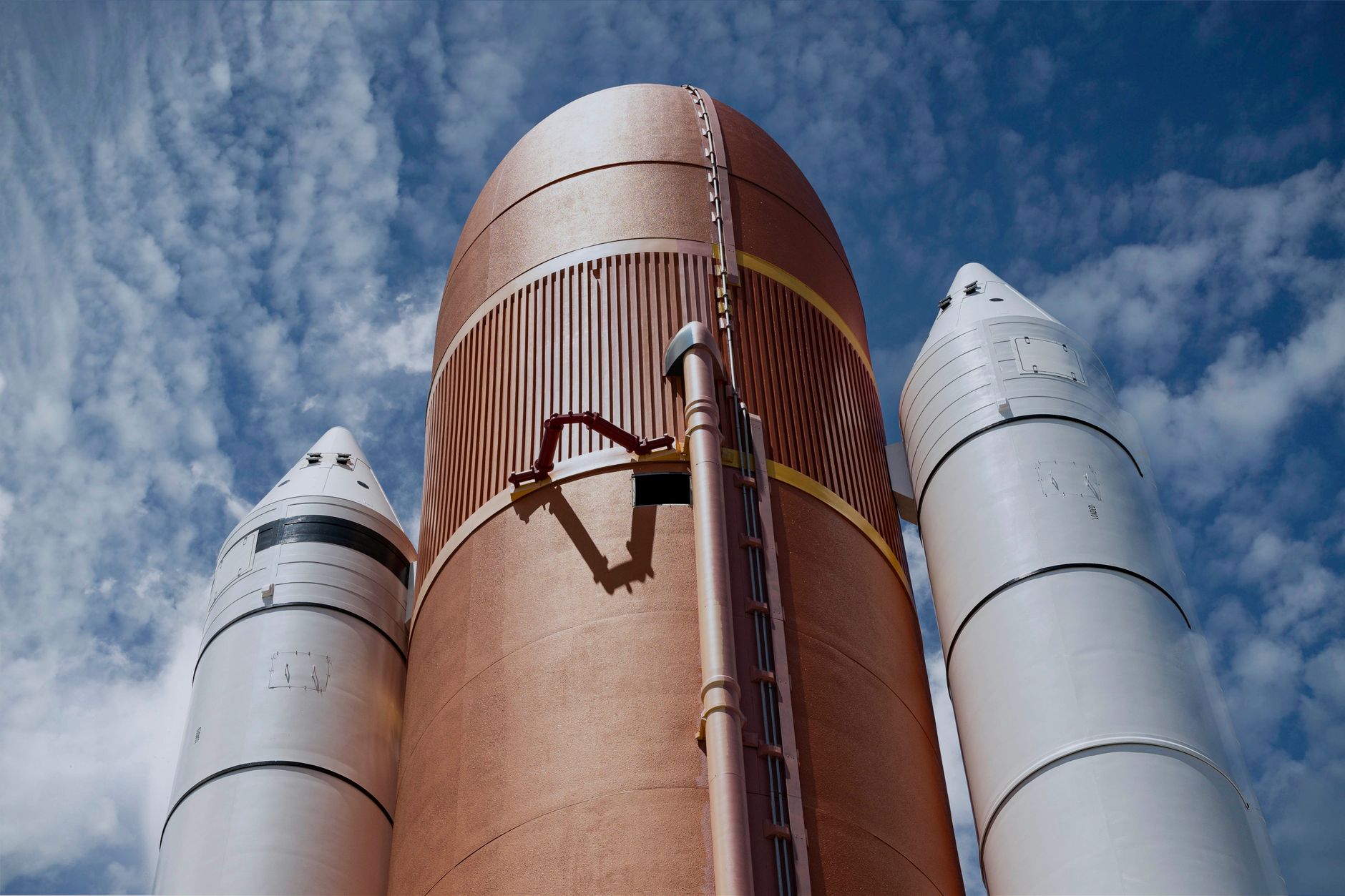
NASA launch of a new space telescope
Level
b2
Topic
science
Read this at a different level:a2b1c1
When Daniela, a science teacher from Montevideo, heard that NASA had launched a new space telescope, she stopped her lesson mid-sentence. She had been explaining the solar system to her students when a notification appeared on her phone. "This changes everything we can look for," she told them, setting the phone down on her desk.
Daniela spent the rest of that evening reading everything she could find about the mission. The telescope, which is roughly the size of a tour bus, had been designed to search for planets beyond our solar system. She found that detail particularly striking. Something so large had been built to detect objects unimaginably far away — planets that no human eye had ever seen directly.
The mission's scale impressed her most. According to what she had read, the telescope aims to identify more than 100,000 planets outside our solar system. Daniela told her partner that she could hardly believe that number. She said that scientists had apparently spent years designing instruments sensitive enough to carry out a search of that size. The telescope, whose capabilities had been described as extraordinary by several researchers, was also built to help unravel deeper mysteries about how the universe works.
By the following morning, Daniela had already prepared a new lesson around the launch. She wished she had known about the mission earlier, so she could have planned something more detailed. Still, she felt that the timing might have been perfect. Her students, who had seemed distracted all week, were suddenly asking questions she had never heard from them before. One student asked whether any of those 100,000 planets might support life. Daniela said she did not know — but that was exactly the kind of question the telescope had been launched to help answer.
Highlighted sentences show the grammar focus structure.
Key Vocabulary
launch
/lɔːntʃ/
To send a spacecraft, satellite, or rocket into space, or more generally to start or introduce something new to the public.
The company plans to launch its new electric car model at an international trade show next spring.
detect
/dɪˈtɛkt/
To discover or notice something that is not easy to see or find, often using special equipment or methods.
The smoke alarm is designed to detect even small amounts of smoke before a fire spreads.
striking
/ˈstraɪkɪŋ/
Noticeable or impressive in a way that attracts your attention or makes a strong impression.
The most striking feature of the new building is its curved glass roof, which reflects the sky.
capability
/ˌkeɪpəˈbɪlɪti/
The ability or power to do something, especially something difficult or advanced.
The new software has the capability to process thousands of customer requests at the same time.
unravel
/ʌnˈrævəl/
To gradually understand or explain something that is complicated or mysterious.
Historians are still trying to unravel the true causes of the economic collapse in the 1930s.
carry out
/ˈkæri aʊt/
To do or complete a task, plan, or activity, especially one that has been organized in advance.
The health department will carry out a series of inspections at local restaurants over the next month.
distracted
/dɪˈstræktɪd/
Unable to concentrate on something because your attention is being pulled in a different direction.
She felt too distracted by the noise outside to finish writing her report before the deadline.
| Image | Word | IPA | Definition | Example |
|---|---|---|---|---|
launch | /lɔːntʃ/ | To send a spacecraft, satellite, or rocket into space, or more generally to start or introduce something new to the public. | The company plans to launch its new electric car model at an international trade show next spring. | |
detect | /dɪˈtɛkt/ | To discover or notice something that is not easy to see or find, often using special equipment or methods. | The smoke alarm is designed to detect even small amounts of smoke before a fire spreads. | |
striking | /ˈstraɪkɪŋ/ | Noticeable or impressive in a way that attracts your attention or makes a strong impression. | The most striking feature of the new building is its curved glass roof, which reflects the sky. | |
capability | /ˌkeɪpəˈbɪlɪti/ | The ability or power to do something, especially something difficult or advanced. | The new software has the capability to process thousands of customer requests at the same time. | |
unravel | /ʌnˈrævəl/ | To gradually understand or explain something that is complicated or mysterious. | Historians are still trying to unravel the true causes of the economic collapse in the 1930s. | |
carry out | /ˈkæri aʊt/ | To do or complete a task, plan, or activity, especially one that has been organized in advance. | The health department will carry out a series of inspections at local restaurants over the next month. | |
distracted | /dɪˈstræktɪd/ | Unable to concentrate on something because your attention is being pulled in a different direction. | She felt too distracted by the noise outside to finish writing her report before the deadline. |
Grammar Spotlight
Non-defining Relative Clauses
noun + , who / which / whose / where , + extra information
When do we use it?
- Use a non-defining relative clause to add extra, non-essential information about a noun that is already clearly identified — the sentence still makes sense without it.
- Choose 'who' for people, 'which' for things or ideas, 'whose' to show possession, and 'where' for places — never use 'that' in non-defining clauses.
- Use them to make writing richer and more sophisticated by weaving in background details without starting a new sentence.
How is it formed?
noun (already identified)+, who / which / whose / where + extra information ,+main clause continues
Commas are essential — they signal the clause is extra, not defining
★Commas = bonus info you could remove!
See it in action
Daniela, who is a science teacher from Montevideo, stopped her lesson the moment she saw the notification.
NASA's new telescope, which was launched earlier this year, has already changed how scientists search for distant planets.
Daniela's students, whose curiosity about space had been growing all term, were thrilled by the news.
The classroom, where Daniela had been explaining the solar system just minutes before, suddenly felt connected to the universe.
Remember this
Defining (no commas — essential)
- •The teacher who stopped her lesson was Daniela. (tells us WHICH teacher)
- •The telescope that NASA launched is revolutionary. (identifies WHICH telescope)
Non-defining (commas — extra info)
- •Daniela, who stopped her lesson, is a science teacher. (we already know who Daniela is)
- •The telescope, which NASA launched this year, is revolutionary. (already identified)
If removing the clause makes the noun unclear, it is defining (no commas); if the noun is already identified and the clause is just bonus detail, it is non-defining (use commas).
Discussion Questions
- 1.
Think about the science education you received growing up. In what ways did your teachers connect classroom lessons to real-world events or discoveries, and how effective do you think that approach was?
- 2.
To what extent do you think space exploration is a worthwhile priority for governments and scientists, given the many challenges people face here on Earth?
- 3.
In your country, how much attention do people generally pay to scientific news — for example, a major space mission or a medical breakthrough? What factors do you think shape how interested the public is in science?
- 4.
How might your daily life or the way you think about the world change if scientists discovered strong evidence that life exists on another planet?
Comprehension Questions
- 1.
Why did Daniela stop her lesson mid-sentence when the notification appeared?
- 2.
What detail about the telescope did Daniela find particularly striking, and what made it so impressive to her?
- 3.
How does the article suggest that the telescope's launch affected Daniela's students?
- 4.
What might have happened if Daniela had learned about the mission before the day of the launch?
- 5.
To what extent does the article suggest that scientific discoveries can change the atmosphere in a classroom?
View answers for the comprehension questions
- 1.She stopped because the news about NASA's new space telescope felt immediately significant to her science lesson — she recognized that it had direct relevance to what she was teaching her students about the solar system.
- 2.She found it striking that something as large as a tour bus had been built to detect planets unimaginably far away — objects that no human eye had ever seen directly. The contrast between the telescope's physical size and the extraordinary distance of its targets made the detail stand out.
- 3.The article implies that the launch gave her students a new sense of curiosity and engagement. Students who had seemed distracted all week suddenly began asking questions Daniela had never heard from them before, suggesting the real-world event sparked genuine intellectual interest.
- 4.She herself reflects on this, saying she wished she had known earlier so she could have planned something more detailed. It is likely she would have prepared a more thorough lesson in advance rather than putting one together overnight.
- 5.The article strongly implies that a timely, real-world scientific event can transform student engagement. Daniela's students shifted from being distracted to asking deep, original questions — suggesting that connecting lessons to live discoveries can have a significant motivational effect.
Test your knowledge
Question 1Fill-in-the-blank
The project manager asked the team to ____ a full review of the safety procedures before the building opened to the public.
Question 2Fill-in-the-blank
After weeks of careful research, the investigator was finally able to ____ the sequence of events that had led to the accident.
Question 3Fill-in-the-blank
The sensors installed along the road are designed to ____ changes in temperature and send an alert if conditions become dangerous.
Question 4Fill-in-the-blank
She found it difficult to finish her report at the café because the loud conversations around her left her feeling completely ____.
Question 5Fill-in-the-blank
Before hiring the new software, the company tested its ____ to handle large amounts of data without slowing down.
View answers for test your knowledge
- 1.carry out
- 2.unravel
- 3.detect
- 4.distracted
- 5.capability
Practice this topic live
Use what you’ve learned in a real 1:1 English conversation with an experienced Talk4Impact tutor.
Practice with tutor