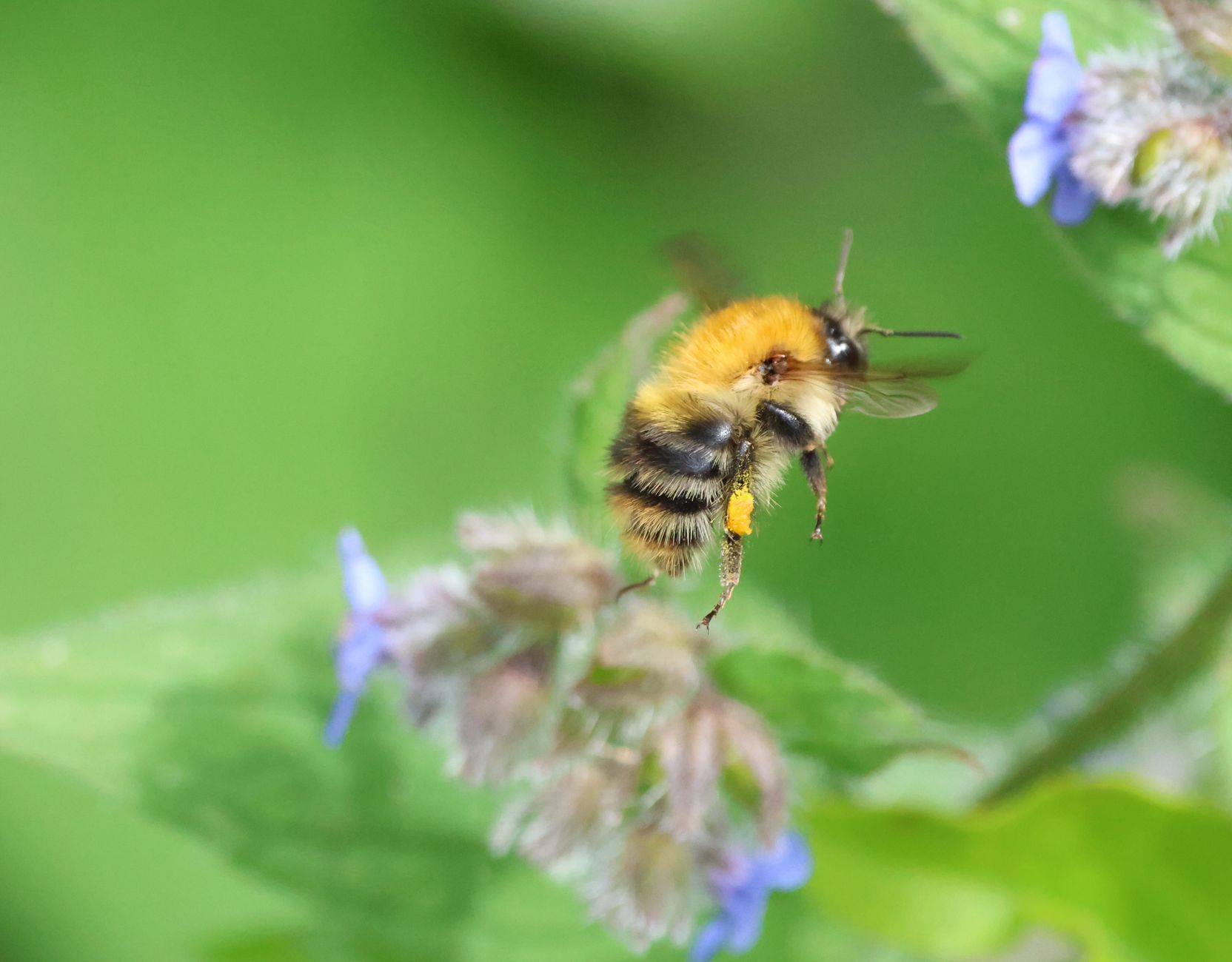


Wildflower meadow restoration in the Lake District
Level
c1
Topic
environment
Read this at a different level:a2b1
There is a widespread assumption that conservation means leaving land alone — that nature, given sufficient time, will reassemble itself. Wildflower meadow restoration in the Lake District challenges that assumption directly. What the ongoing work led by Friends of the Lake District reveals is that recovery is not passive; it is a deliberate, carefully calibrated intervention against decades of ecological attrition.
The project centres on the reintroduction of plant species that intensive farming practices gradually eliminated from the landscape. Driven by the demands of agricultural productivity, many Lake District meadows were converted into monocultures or heavily grazed pastures over the course of the twentieth century. The botanical diversity that once characterised these habitats — the ragged robin, yellow rattle, and meadow cranesbill that defined their seasonal rhythms — was progressively displaced. Having stripped the soil of the conditions these species require, conventional farming left behind a landscape that looks green but is, ecologically speaking, impoverished.
What Friends of the Lake District is now undertaking is, in effect, a reversal of that trajectory. Hundreds of wildflowers are to be planted at the restoration site, not simply as an aesthetic gesture but as a structural intervention in a degraded ecosystem. The choice of species matters considerably: reintroduced plants must be capable of establishing themselves in soils that have been altered by years of fertiliser application and compaction. Faced with these constraints, restoration ecologists cannot simply scatter seed and hope for the best — the process demands careful site preparation, species selection, and ongoing monitoring.
The deeper significance of this project, however, lies in what it implies about the relationship between farming and ecological loss. It would be reductive to frame agricultural practice as straightforwardly destructive; food production has always entailed trade-offs with the natural environment, and those trade-offs have been shaped by economic pressures that individual farmers rarely controlled. Nevertheless, the cumulative effect of those decisions is now visible in the depletion of meadow biodiversity across much of upland England. Restoration efforts like this one do not erase that history — they work within it, attempting to recover what can still be recovered.
Of greatest interest, perhaps, is the question this project implicitly raises: not whether wildflower meadows can be restored, but whether restoration alone is sufficient. Having acknowledged the scale of biodiversity loss in the region, conservationists and land managers may need to confront a harder question — what changes in land use are required to ensure that restored meadows do not simply revert once the intervention ends.
Highlighted sentences show the grammar focus structure.
Key Vocabulary
attrition
/əˈtrɪʃən/
The gradual weakening, reduction, or destruction of something through sustained pressure or repeated loss over time.
The company lost half its workforce through attrition rather than deliberate redundancies, as employees quietly resigned without being replaced.
calibrated
/ˈkælɪbreɪtɪd/
Carefully adjusted or fine-tuned to achieve a precise and intended outcome, often implying methodical planning rather than improvisation.
The diplomat delivered a calibrated response to the accusations, acknowledging some concerns while firmly rejecting others.
impoverished
/ɪmˈpɒvərɪʃt/
Reduced to a state of poverty or serious deficiency, whether in material resources, quality, or richness of content.
Years of underfunding had left the school curriculum impoverished, with arts and music programmes almost entirely eliminated.
trajectory
/trəˈdʒektəri/
The course or direction of development that a process, situation, or person follows over a period of time.
After the merger, the company's financial trajectory shifted dramatically, moving from consistent losses to steady growth within two years.
reductive
/rɪˈdʌktɪv/
Describing an approach or argument that oversimplifies a complex issue by ignoring important nuances or reducing it to a single factor.
Blaming the entire housing crisis on foreign investors is reductive; the causes are far more structural and deeply rooted.
entail
/ɪnˈteɪl/
To make something necessary as a condition or consequence; to involve or require something as an inevitable part of a process.
Pursuing a career in medicine entails years of intensive study and a willingness to work under considerable pressure.
cumulative
/ˈkjuːmjələtɪv/
Increasing in force, significance, or effect as successive elements are added together over time.
The cumulative impact of small daily stresses can be just as damaging to mental health as a single major traumatic event.
revert
/rɪˈvɜːt/
To return to a previous state, condition, or pattern of behaviour, especially after a period of change or improvement.
Without continued support structures in place, many patients revert to unhealthy habits within months of completing treatment.
| Image | Word | IPA | Definition | Example |
|---|---|---|---|---|
attrition | /əˈtrɪʃən/ | The gradual weakening, reduction, or destruction of something through sustained pressure or repeated loss over time. | The company lost half its workforce through attrition rather than deliberate redundancies, as employees quietly resigned without being replaced. | |
calibrated | /ˈkælɪbreɪtɪd/ | Carefully adjusted or fine-tuned to achieve a precise and intended outcome, often implying methodical planning rather than improvisation. | The diplomat delivered a calibrated response to the accusations, acknowledging some concerns while firmly rejecting others. | |
impoverished | /ɪmˈpɒvərɪʃt/ | Reduced to a state of poverty or serious deficiency, whether in material resources, quality, or richness of content. | Years of underfunding had left the school curriculum impoverished, with arts and music programmes almost entirely eliminated. | |
trajectory | /trəˈdʒektəri/ | The course or direction of development that a process, situation, or person follows over a period of time. | After the merger, the company's financial trajectory shifted dramatically, moving from consistent losses to steady growth within two years. | |
reductive | /rɪˈdʌktɪv/ | Describing an approach or argument that oversimplifies a complex issue by ignoring important nuances or reducing it to a single factor. | Blaming the entire housing crisis on foreign investors is reductive; the causes are far more structural and deeply rooted. | |
entail | /ɪnˈteɪl/ | To make something necessary as a condition or consequence; to involve or require something as an inevitable part of a process. | Pursuing a career in medicine entails years of intensive study and a willingness to work under considerable pressure. | |
cumulative | /ˈkjuːmjələtɪv/ | Increasing in force, significance, or effect as successive elements are added together over time. | The cumulative impact of small daily stresses can be just as damaging to mental health as a single major traumatic event. | |
revert | /rɪˈvɜːt/ | To return to a previous state, condition, or pattern of behaviour, especially after a period of change or improvement. | Without continued support structures in place, many patients revert to unhealthy habits within months of completing treatment. |
Grammar Spotlight
Participle Clauses
present/past participle + clause replacing a full subordinate clause
When do we use it?
- Use a present participle clause (V-ing) to express an action happening at the same time as, or immediately before, the main verb — often replacing 'as', 'while', or 'because' + subject + verb.
- Use a past participle clause (V-ed) to convey a passive or completed relationship between two ideas, replacing constructions like 'once it had been…' or 'because it was…' — common in formal, academic, and journalistic registers.
- Use participle clauses to compress information elegantly and signal advanced writing proficiency; they allow you to pack cause, condition, time, or concession into a single clause without repeating the subject.
How is it formed?
present participle (V-ing) OR past participle (V-ed/irregular)++ rest of clause (object, complement, adverbial)
The participle clause shares its implied subject with the main clause
★One subject, two actions — drop the conjunction.
See it in action
Led by Friends of the Lake District, the restoration project has overturned long-held assumptions about how nature recovers.
Volunteers, working across degraded hillsides each autumn, have gradually reintroduced dozens of native wildflower species.
Having recognised that passive conservation was insufficient, ecologists began actively managing the meadow soil.
Left undisturbed for decades, the land failed to regenerate the biodiversity that campaigners had hoped for.
Remember this
✗Walking through the meadow, the wildflowers were breathtaking.
✓Walking through the meadow, we found the wildflowers breathtaking.
The implied subject of the participle clause must match the subject of the main clause. Here 'the wildflowers' cannot be 'walking' — this is a dangling participle, a frequent C1-level error.
✗Having been restoring the habitat for years, the results are now visible.
✓Having restored the habitat for years, the team can now see visible results.
'Having been restoring' incorrectly combines the perfect and continuous aspects in a participle clause. Use 'having + past participle' for a completed prior action.
✗The report published recently it challenges the assumption that nature heals itself.
✓Published recently, the report challenges the assumption that nature heals itself.
When a past participle clause fronts the sentence, the subject pronoun ('it') must be dropped — the participle clause already implies the subject of the main clause.
Discussion Questions
- 1.
The article suggests that individual farmers were often driven by economic pressures rather than a desire to harm the environment. In your country, how much do economic pressures shape the way land is farmed or managed? Do you think farmers there have enough support to make environmentally responsible choices, or are they forced to prioritise productivity above all else?
- 2.
The project described in the article attempts to reverse damage caused over many decades. In your view, is it ever truly possible to restore something that has been lost gradually over a long period of time — whether in nature, in a community, or in a relationship? What conditions do you think are necessary for genuine restoration to succeed?
- 3.
Think about the natural landscapes or green spaces near where you grew up or currently live. Have you noticed any changes in them over the years — either improvement or decline? What do you think has caused those changes, and who, if anyone, seems to take responsibility for them in your community?
- 4.
The article implies that short-term interventions may be insufficient if the underlying conditions that caused the problem are not addressed. Can you think of an example from your own experience — in any area of life, not necessarily environmental — where a solution was put in place but failed because the root cause was never tackled? What would a more effective long-term approach have looked like?
Comprehension Questions
- 1.
Why does the author argue that ecological recovery in the Lake District cannot be considered a passive process?
- 2.
What specific changes did intensive farming bring to Lake District meadows over the course of the twentieth century?
- 3.
How does the author complicate a straightforwardly negative view of agricultural practice in relation to biodiversity loss?
- 4.
Is the restoration project described as purely symbolic, or does it serve a structural ecological function — and what evidence from the article supports your answer?
- 5.
What harder question does the article ultimately suggest conservationists must confront, and how does it go beyond the immediate goals of the restoration project?
View answers for the comprehension questions
- 1.The author argues that recovery requires deliberate, carefully calibrated intervention because decades of ecological attrition have left the land in a degraded state that nature alone cannot reverse. Without active site preparation, species selection, and ongoing monitoring, the conditions necessary for wildflower species to re-establish simply do not exist.
- 2.Intensive farming converted many meadows into monocultures or heavily grazed pastures, progressively eliminating botanically diverse species such as ragged robin, yellow rattle, and meadow cranesbill. Fertiliser application and soil compaction further altered the ground conditions, leaving landscapes that appeared green but were ecologically impoverished.
- 3.The author acknowledges that framing farming as simply destructive would be reductive, pointing out that food production has always involved trade-offs with the natural environment and that individual farmers were largely shaped by economic pressures beyond their control. Nevertheless, the author maintains that the cumulative effect of those decisions is now clearly visible in the depletion of meadow biodiversity across upland England.
- 4.The project is explicitly framed as a structural intervention rather than a merely aesthetic gesture, as the choice of species is described as critically important for re-establishing ecological function in degraded soils. The article's emphasis on site preparation, careful species selection, and ongoing monitoring further confirms that the work is intended to produce lasting ecological change, not simply visual improvement.
- 5.The article suggests that conservationists must ask not only whether wildflower meadows can be restored, but what changes in land use are needed to prevent restored meadows from reverting once active intervention ends. This moves the conversation beyond the mechanics of restoration to the broader structural and policy conditions required to sustain any ecological gains over the long term.
Test your knowledge
Question 1Fill-in-the-blank
Running a large organisation will inevitably ____ significant administrative costs, regardless of how efficiently the day-to-day operations are managed.
Question 2Fill-in-the-blank
After a promising start, the project began to lose momentum, and by the end of the year its ____ had shifted from rapid growth toward a slow but steady decline.
Question 3Fill-in-the-blank
The ____ effect of small daily expenses can be surprising; many people only realise how much they have spent when they review their bank statements at the end of the month.
Question 4Fill-in-the-blank
The surgeon's response to the unexpected complication was ____ and precise, demonstrating years of training rather than any reliance on guesswork.
Question 5Fill-in-the-blank
Years of chronic stress and insufficient rest had left them in a state of complete ____, with neither the energy nor the motivation to engage with tasks they once found straightforward.
View answers for test your knowledge
- 1.entail
- 2.trajectory
- 3.cumulative
- 4.calibrated
- 5.attrition
Practice this topic live
Use what you’ve learned in a real 1:1 English conversation with an experienced Talk4Impact tutor.
Practice with tutor