
Shark conservation funding in the UK
Level
b2
Topic
environment
Read this at a different level:b1c1
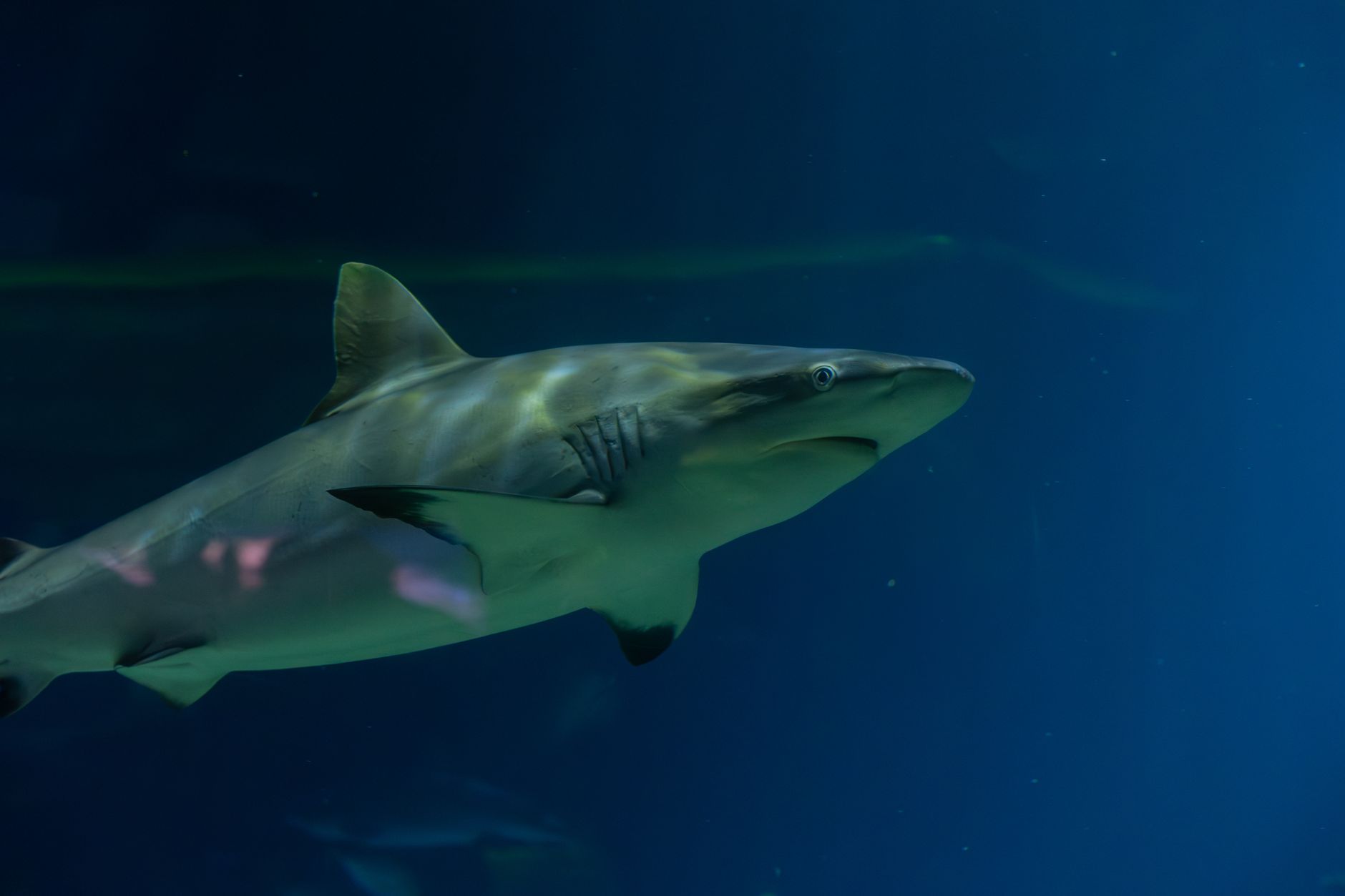
Most people assume that sharks are apex predators with little to fear — but in UK waters, several species have declined so significantly that they now need active protection. A £1 million funding package, which has been awarded to scientists by Natural England's Species Recovery Programme, is intended to address exactly that problem.
The three species that have been identified as priorities are the blue shark, the porbeagle, and the tope. Each of these has been affected by overfishing, habitat pressure, and slow reproductive rates. The porbeagle, which was once common in northern European waters, has been particularly hard hit. Conservation experts argue that without targeted intervention, meaningful recovery would be difficult to achieve.
The funding will be used to support scientific research into the behaviour, movement, and population dynamics of these three species. It is hoped that the data collected will be used to inform future management decisions. Measures such as protected zones and fishing restrictions may also be introduced as a result. Importantly, these decisions will be shaped by the evidence that is gathered through this programme.
Natural England's Species Recovery Programme has previously been applied to land-based animals and plants, so its extension into marine conservation is considered a significant development. The fact that public money has been committed to shark protection signals a broader shift in how the UK approaches its marine environment. Sharks have often been misunderstood and, consequently, have not always been given the conservation attention they deserve.
The scale of the challenge should not be underestimated. Recovery programmes of this kind can take many years before results are clearly seen. Nevertheless, the £1 million investment represents a meaningful step. If these three species can be stabilised, it would demonstrate that targeted funding can make a real difference to marine biodiversity.
Highlighted sentences show the grammar focus structure.
Key Vocabulary
apex
/ˈeɪpɛks/
The highest point or most dominant position in a system or hierarchy.
The eagle is considered an apex predator in many mountain ecosystems, with no natural enemies to threaten it.
intervention
/ˌɪntərˈvɛnʃən/
An action taken to change or improve a situation that would otherwise continue in a negative direction.
Early medical intervention can significantly improve a patient's chances of a full recovery.
targeted
/ˈtɑːrɡɪtɪd/
Designed or directed specifically at a particular group, problem, or goal rather than being general.
The government launched a targeted campaign to encourage young people in rural areas to vote.
dynamics
/daɪˈnæmɪks/
The forces or processes that cause change and development within a system or group.
The dynamics of the team shifted considerably after a new manager was appointed.
consequently
/ˈkɒnsɪkwəntli/
As a result of something that has just been mentioned; therefore.
She missed several weeks of training and consequently was not selected for the final competition.
stabilise
/ˈsteɪbɪlaɪz/
To make or become steady and unlikely to change or get worse.
The doctors worked through the night to stabilise the patient's condition before performing surgery.
biodiversity
/ˌbaɪoʊdaɪˈvɜːrsɪti/
The variety of different plants, animals, and other living things that exist in a particular environment.
Cutting down large areas of rainforest has a devastating impact on local biodiversity.
| Image | Word | IPA | Definition | Example |
|---|---|---|---|---|
apex | /ˈeɪpɛks/ | The highest point or most dominant position in a system or hierarchy. | The eagle is considered an apex predator in many mountain ecosystems, with no natural enemies to threaten it. | |
intervention | /ˌɪntərˈvɛnʃən/ | An action taken to change or improve a situation that would otherwise continue in a negative direction. | Early medical intervention can significantly improve a patient's chances of a full recovery. | |
targeted | /ˈtɑːrɡɪtɪd/ | Designed or directed specifically at a particular group, problem, or goal rather than being general. | The government launched a targeted campaign to encourage young people in rural areas to vote. | |
dynamics | /daɪˈnæmɪks/ | The forces or processes that cause change and development within a system or group. | The dynamics of the team shifted considerably after a new manager was appointed. | |
consequently | /ˈkɒnsɪkwəntli/ | As a result of something that has just been mentioned; therefore. | She missed several weeks of training and consequently was not selected for the final competition. | |
stabilise | /ˈsteɪbɪlaɪz/ | To make or become steady and unlikely to change or get worse. | The doctors worked through the night to stabilise the patient's condition before performing surgery. | |
biodiversity | /ˌbaɪoʊdaɪˈvɜːrsɪti/ | The variety of different plants, animals, and other living things that exist in a particular environment. | Cutting down large areas of rainforest has a devastating impact on local biodiversity. |
Grammar Spotlight
Non-defining Relative Clauses
noun + , who / which / whose / where , + extra information
When do we use it?
- Use a non-defining relative clause to add extra, non-essential information about a noun that is already clearly identified — removing the clause would not change the core meaning of the sentence.
- Choose 'who' for people, 'which' for things or ideas, 'whose' to show possession, and 'where' for places — and always wrap the clause in commas.
- Use this structure to make writing feel more sophisticated by weaving background detail into a sentence rather than writing two separate sentences.
How is it formed?
noun (already identified)+, who / which / whose / where + extra information ,+main clause continues
Commas are essential — they signal the clause is extra, not defining
★Commas = bonus info you could remove!
See it in action
The funding package, which was awarded by Natural England, will support shark conservation in UK waters.
Several shark species, whose populations have declined sharply, are now protected under new legislation.
Scientists at the Marine Institute, who have studied UK sharks for decades, welcomed the £1 million grant.
The North Atlantic, where many endangered shark species migrate, has become a focus for conservation efforts.
Remember this
Defining relative clause (no commas)
- •The shark that attacked the diver was a great white.
- •Scientists who study marine life often work at sea for months.
- •The report which was published last year changed conservation policy.
Non-defining relative clause (with commas)
- •The great white shark, which is the largest predatory fish, is rarely seen in UK waters.
- •Dr Patel, who has studied sharks for 20 years, leads the new project.
- •The report, which was published last year, has already influenced government policy.
Without commas, the clause identifies which one; with commas, it simply adds bonus detail about something already clear — and 'that' can never replace 'which' or 'who' in the non-defining version.
Discussion Questions
- 1.
To what extent do you think governments should prioritise spending public money on protecting endangered animals, compared to other social needs? What factors would influence your view?
- 2.
In your country, are there any animals or natural habitats that are considered at risk or in need of protection? How do people there generally feel about conservation efforts?
- 3.
How might public attitudes towards a species — for example, fear or misunderstanding — affect the level of conservation support it receives? Can you think of an example from your own experience or culture?
- 4.
In what ways has your local environment — such as rivers, forests, coastlines, or farmland — changed during your lifetime? What do you think has caused those changes?
Comprehension Questions
- 1.
Why have the blue shark, the porbeagle, and the tope been identified as priority species for conservation?
- 2.
What does the article suggest about the broader significance of Natural England's decision to extend its Species Recovery Programme to marine life?
- 3.
How might the situation for these shark species have developed if the £1 million funding had not been awarded?
- 4.
In what ways does the article connect the collection of scientific data to the future protection of these shark species?
- 5.
To what extent does the writer present the £1 million investment as a solution to the problem of shark decline in UK waters?
View answers for the comprehension questions
- 1.These three species have been identified as priorities because they have all been significantly affected by overfishing, habitat pressure, and slow reproductive rates, making natural recovery without intervention very difficult.
- 2.The article suggests that this extension represents a meaningful shift in how the UK thinks about its marine environment, signalling that sharks and other sea creatures deserve the same conservation attention previously given to land-based animals and plants.
- 3.Without the funding, meaningful recovery would likely have remained very difficult to achieve, as the article implies that targeted intervention is essential given the species' slow reproductive rates and the ongoing pressures they face.
- 4.The article explains that data on behaviour, movement, and population dynamics will be used to inform future management decisions, and that specific measures such as protected zones and fishing restrictions may follow directly from the evidence gathered.
- 5.The writer is cautiously optimistic rather than fully confident, acknowledging that recovery programmes can take many years to show results but arguing that the investment is a meaningful step that could demonstrate the value of targeted funding for marine biodiversity.
Test your knowledge
Question 1Fill-in-the-blank
The nature reserve was praised for protecting the remarkable ____ of species found within its boundaries, from rare insects to large mammals.
Question 2Fill-in-the-blank
After years of hard work, she finally reached the ____ of her career when she was appointed director of the organisation.
Question 3Fill-in-the-blank
The health campaign was ____ at young adults, using social media platforms they were most likely to use every day.
Question 4Fill-in-the-blank
The teacher's early ____ helped the student develop better study habits before the problem became too serious to address.
Question 5Fill-in-the-blank
After a period of uncertainty, the patient's condition began to ____, and the medical team felt cautiously optimistic about the recovery.
View answers for test your knowledge
- 1.biodiversity
- 2.apex
- 3.targeted
- 4.intervention
- 5.stabilise
Practice this topic live
Use what you’ve learned in a real 1:1 English conversation with an experienced Talk4Impact tutor.
Practice with tutor