

Shark conservation funding in the UK
Level
c1
Topic
environment
Read this at a different level:b1b2
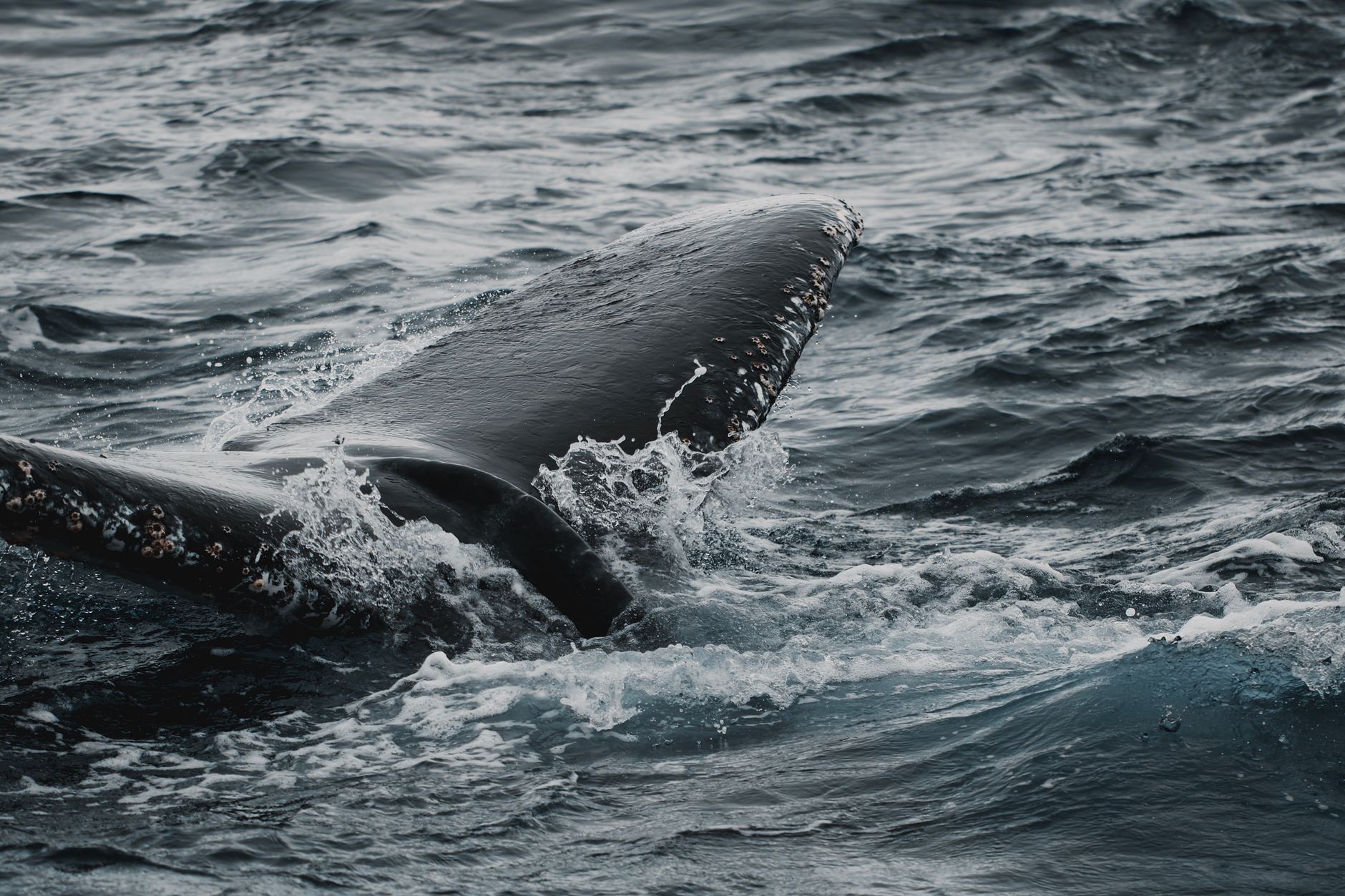
Most people, when they think of sharks, picture distant tropical waters — not the grey Atlantic swells off the British coastline. Yet blue sharks, porbeagles, and tope have long inhabited UK seas, and it is the quiet erosion of their populations, rather than any dramatic single event, that has brought conservationists to a point of urgency. A £1 million funding commitment from Natural England's Species Recovery Programme now marks a deliberate attempt to reverse that trajectory.
What makes this intervention worth examining closely is not merely its scale, but the assumption it challenges: that shark conservation is, by definition, a concern for warmer, more biodiverse waters. The three species targeted by the programme — blue sharks, porbeagles, and tope — are not charismatic megafauna in the conventional sense, nor do they occupy the cultural imagination the way their larger relatives do. They are, however, ecologically consequential. Their decline would ripple through the food webs they help regulate, destabilising ecosystems that coastal communities and marine industries depend upon, often without fully recognising that dependence.
It is the Species Recovery Programme's structural approach that distinguishes this initiative from more reactive conservation efforts. Rather than responding to a collapse already in progress, the funding is oriented toward recovery — a subtly but meaningfully different ambition. Recovery implies not merely halting decline but actively restoring populations to a point where they can sustain themselves without ongoing intervention. Having identified these three species as priority targets, Natural England is committing to a long-term stewardship model rather than a short-term remediation exercise.
The porbeagle, in particular, illustrates why such sustained commitment matters. Once subject to intensive commercial fishing, its numbers fell sharply across the North Atlantic before partial protections were introduced. The recovery of a species operating on such long reproductive timescales cannot be achieved through brief funding cycles or piecemeal policy. What the porbeagle's history reveals is that conservation gains are fragile and easily reversed when institutional attention shifts elsewhere.
There is a broader implication here that extends beyond any single species. The UK's marine environment has historically received less conservation investment relative to its terrestrial ecosystems, a disparity that the Species Recovery Programme appears designed, at least in part, to address. Whether £1 million proves sufficient to produce measurable population recovery remains to be seen. Nevertheless, the framing of sharks as species deserving active recovery — not merely passive protection — represents a recalibration of conservation priorities that marine biologists have long advocated.
Highlighted sentences show the grammar focus structure.
Key Vocabulary
trajectory
/trəˈdʒektəri/
The general course or direction of development that something follows over time, particularly when this can be observed, measured, or predicted.
Early intervention programmes aim to alter the educational trajectory of children from disadvantaged backgrounds before patterns become entrenched.
erosion
/ɪˈroʊʒən/
The gradual and often imperceptible reduction or weakening of something, such as rights, standards, or values, through sustained pressure or neglect.
Civil liberties groups expressed concern about the slow erosion of privacy rights in the wake of new surveillance legislation.
consequential
/ˌkɒnsɪˈkwenʃəl/
Having significant or far-reaching effects and implications, often used to describe something whose importance may not be immediately obvious.
The seemingly minor amendment to the tax code proved far more consequential than lawmakers had anticipated, affecting millions of small businesses.
stewardship
/ˈstjuːədʃɪp/
The responsible long-term management and protection of something entrusted to one's care, particularly resources, organisations, or the natural environment.
The foundation praised the outgoing director for her exemplary stewardship of the museum's collection over two decades.
piecemeal
/ˈpiːsmiːl/
Done or implemented gradually in separate, uncoordinated stages rather than as part of a coherent and comprehensive plan.
Critics argued that the government's piecemeal approach to healthcare reform had created more inconsistencies than it resolved.
disparity
/dɪˈspærɪti/
A notable and often unjust difference or inequality between two or more things, groups, or situations being compared.
The report highlighted a stark disparity in life expectancy between the wealthiest and poorest regions of the country.
recalibration
/ˌriːˌkælɪˈbreɪʃən/
A significant adjustment or reassessment of priorities, strategies, or approaches in response to new information or changing circumstances.
The financial crisis prompted a fundamental recalibration of risk assessment models across the banking sector.
advocate
/ˈædvəkeɪt/
To publicly and actively support or recommend a particular cause, policy, or course of action, especially over a sustained period.
Several prominent economists have long advocated for a universal basic income as a means of reducing structural poverty.
| Image | Word | IPA | Definition | Example |
|---|---|---|---|---|
trajectory | /trəˈdʒektəri/ | The general course or direction of development that something follows over time, particularly when this can be observed, measured, or predicted. | Early intervention programmes aim to alter the educational trajectory of children from disadvantaged backgrounds before patterns become entrenched. | |
erosion | /ɪˈroʊʒən/ | The gradual and often imperceptible reduction or weakening of something, such as rights, standards, or values, through sustained pressure or neglect. | Civil liberties groups expressed concern about the slow erosion of privacy rights in the wake of new surveillance legislation. | |
consequential | /ˌkɒnsɪˈkwenʃəl/ | Having significant or far-reaching effects and implications, often used to describe something whose importance may not be immediately obvious. | The seemingly minor amendment to the tax code proved far more consequential than lawmakers had anticipated, affecting millions of small businesses. | |
stewardship | /ˈstjuːədʃɪp/ | The responsible long-term management and protection of something entrusted to one's care, particularly resources, organisations, or the natural environment. | The foundation praised the outgoing director for her exemplary stewardship of the museum's collection over two decades. | |
piecemeal | /ˈpiːsmiːl/ | Done or implemented gradually in separate, uncoordinated stages rather than as part of a coherent and comprehensive plan. | Critics argued that the government's piecemeal approach to healthcare reform had created more inconsistencies than it resolved. | |
disparity | /dɪˈspærɪti/ | A notable and often unjust difference or inequality between two or more things, groups, or situations being compared. | The report highlighted a stark disparity in life expectancy between the wealthiest and poorest regions of the country. | |
recalibration | /ˌriːˌkælɪˈbreɪʃən/ | A significant adjustment or reassessment of priorities, strategies, or approaches in response to new information or changing circumstances. | The financial crisis prompted a fundamental recalibration of risk assessment models across the banking sector. | |
advocate | /ˈædvəkeɪt/ | To publicly and actively support or recommend a particular cause, policy, or course of action, especially over a sustained period. | Several prominent economists have long advocated for a universal basic income as a means of reducing structural poverty. |
Grammar Spotlight
Cleft Sentences
It is / was + [focus] + that / who + [rest of clause]
When do we use it?
- Use cleft sentences to foreground a specific piece of information — subject, object, time, place, or reason — that you want the listener or reader to treat as the most important part of your message.
- They are especially effective in formal writing and academic argument to contrast one element against another implied alternative, as in 'It is the slow decline, not a single catastrophe, that threatens UK shark populations.'
- Wh-clefts (What … is / was …) offer a more emphatic, spoken-register alternative when you want to frame new information as the logical conclusion of what has just been said.
How is it formed?
It is / It was++ [focused element]++ that / who + [remainder of clause]
The focused element is whatever you want to emphasise — subject, object, adverbial, or reason
★Shift any element into focus with 'It is … that'
See it in action
It is the quiet erosion of their populations that has brought UK sharks to the brink.
It was overfishing, not a single dramatic event, that decimated porbeagle numbers in the North Atlantic.
What scientists find most alarming is the speed at which blue shark bycatch has increased.
It is in the grey Atlantic swells off Britain's coast that these ancient predators quietly persist.
Remember this
✗It is the declining population which has caused concern among scientists.
✓It is the declining population that has caused concern among scientists.
In cleft sentences, 'that' is the standard relativiser for things, reasons, and adverbials. Using 'which' is not ungrammatical in all dialects, but 'that' is strongly preferred in formal and academic registers at C1 level.
✗It was the researchers who did they publish the findings last year.
✓It was the researchers who published the findings last year.
The clause after 'who' or 'that' is a relative clause, not a full independent clause — do not repeat the subject pronoun or add an auxiliary that duplicates the subject.
✗What it concerns environmentalists is the rate of bycatch.
✓What concerns environmentalists is the rate of bycatch.
In a wh-cleft, 'what' already acts as the subject of the embedded clause; inserting 'it' creates a redundant dummy subject and breaks the structure.
Discussion Questions
- 1.
In your country, how much attention do environmental issues tend to receive from the government and the general public? Do you think marine or wildlife conservation is treated as a genuine priority, or does it tend to be overshadowed by economic concerns?
- 2.
The article argues that people often fail to recognise their dependence on ecosystems until those systems are already under serious threat. Can you think of an example from your own country or region where this pattern has played out — where environmental damage was only taken seriously once it had already become severe?
- 3.
Long-term conservation projects require sustained institutional commitment over many years, even when results are not immediately visible. In your view, what makes it so difficult for governments or organisations to maintain that kind of long-term focus, and how do you think that challenge could be addressed?
- 4.
The article challenges the assumption that certain species are more worthy of conservation effort than others based on their cultural appeal or charisma. Do you personally find it easier to care about some animals or environmental causes more than others? What shapes those instincts, and do you think they should influence how conservation funding is allocated?
Comprehension Questions
- 1.
Why does the article suggest that the decline of blue sharks, porbeagles, and tope poses a risk beyond the species themselves?
- 2.
What distinguishes the Species Recovery Programme's approach from more conventional conservation efforts, according to the article?
- 3.
How does the history of the porbeagle illustrate the fragility of conservation progress?
- 4.
Is the £1 million funding commitment presented as definitively sufficient to achieve its goals?
- 5.
Taken together, what broader implication do the final two paragraphs suggest about the UK's approach to marine conservation?
View answers for the comprehension questions
- 1.The article argues that these species are ecologically consequential because they help regulate food webs. Their decline would destabilise marine ecosystems that coastal communities and marine industries depend upon, often without fully recognising that dependence.
- 2.Rather than responding reactively to a collapse already underway, the programme is oriented toward active recovery — restoring populations to a point of self-sufficiency — rather than merely halting decline. This represents a long-term stewardship model rather than a short-term remediation exercise.
- 3.The porbeagle's numbers fell sharply due to intensive commercial fishing before partial protections were introduced, demonstrating that recovery is slow given the species' long reproductive timescales. The article uses this history to argue that gains can be easily reversed when institutional attention and funding shift elsewhere.
- 4.No, the article explicitly acknowledges uncertainty, stating that whether £1 million proves sufficient to produce measurable population recovery remains to be seen. The funding is nonetheless framed as significant for the shift in conservation priorities it represents.
- 5.The final paragraphs suggest that the UK has historically underinvested in marine conservation relative to terrestrial ecosystems, and that this programme represents a deliberate attempt to address that disparity. Marine biologists have long advocated for sharks to be treated as species deserving active recovery, and this initiative signals a recalibration of priorities in that direction.
Test your knowledge
Question 1Fill-in-the-blank
The new director was praised for her careful ____ of the organisation's resources during a period of significant financial uncertainty.
Question 2Fill-in-the-blank
The renovation was carried out in such a ____ fashion — one room at a time, with no overall plan — that the building remained disruptive to use for nearly three years.
Question 3Fill-in-the-blank
She has spent the past decade working to ____ for better access to education in underserved communities, speaking at conferences and lobbying local authorities.
Question 4Fill-in-the-blank
The report highlighted a significant ____ in test scores between students who had access to private tutoring and those who did not.
Question 5Fill-in-the-blank
After the team's repeated failures to meet deadlines, the manager called for a complete ____ of how projects were being planned and prioritised.
View answers for test your knowledge
- 1.stewardship
- 2.piecemeal
- 3.advocate
- 4.disparity
- 5.recalibration
Practice this topic live
Use what you’ve learned in a real 1:1 English conversation with an experienced Talk4Impact tutor.
Practice with tutor